A home for the land, for the animals, and for one another
Een thuis voor het land, voor de dieren, en voor elkaar
Un hogar para la tierra, para los animales y para todos
··
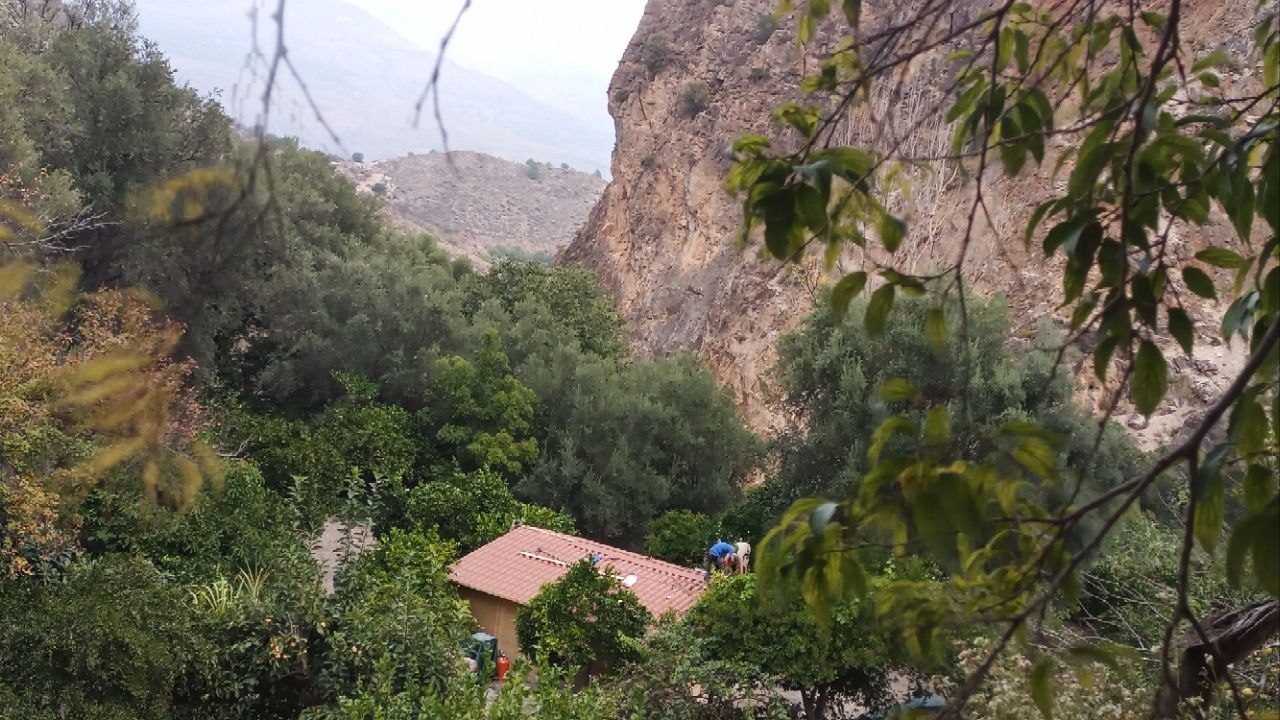
I met this land in a very special way. I was standing at the top of the mountain, looking down, and through the trees I saw a small open spot. Something in my heart knew at once: this is special. As if something I had always felt and known had suddenly taken form, there, visible before my eyes. And when I arrived, it was a homecoming.
The land communicated with me. It said: I will care for you, and you will care for me. That we would bring the water back here, and grow food for the local community — because that is going to be so important in the near future. We found the owner, and he practically gave it to us as a gift.
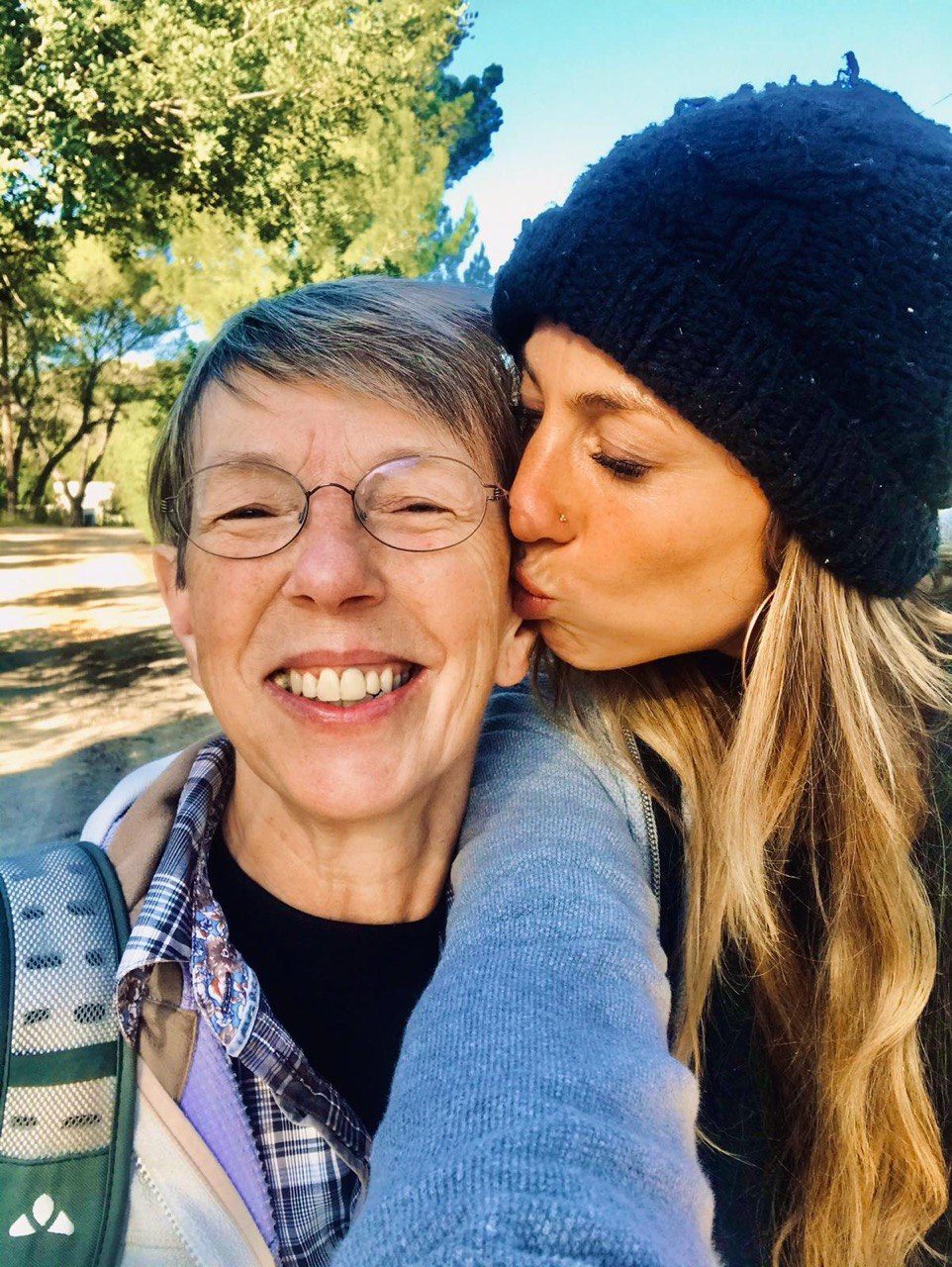
And I am not doing this alone: I am doing it together with my mother. That makes it all the more special — mother and daughter caring together for this land, and for everything that lives on it.
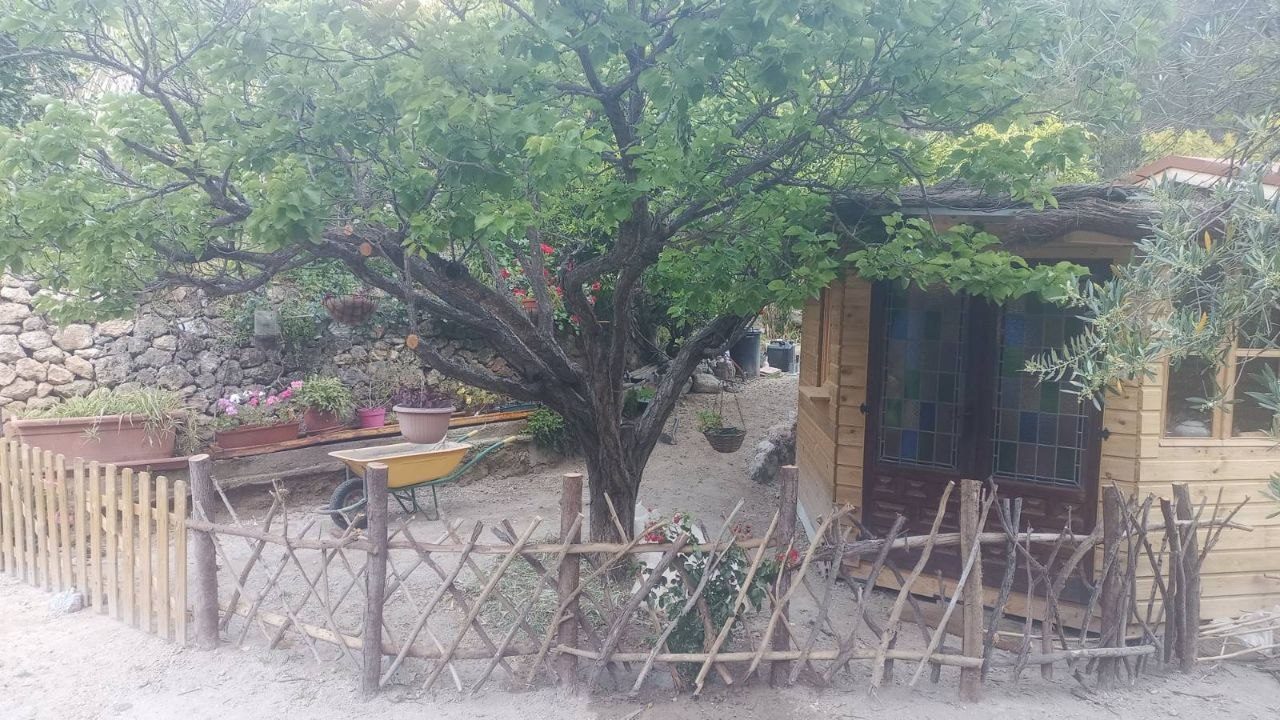
We had no money to buy anything, and yet everything fell into place. The previous owner said: why don’t you put the cabina on the land? And so it happened — the very next day the little wooden house arrived. We hadn’t even intended to live there. Everything showed the way of its own accord.
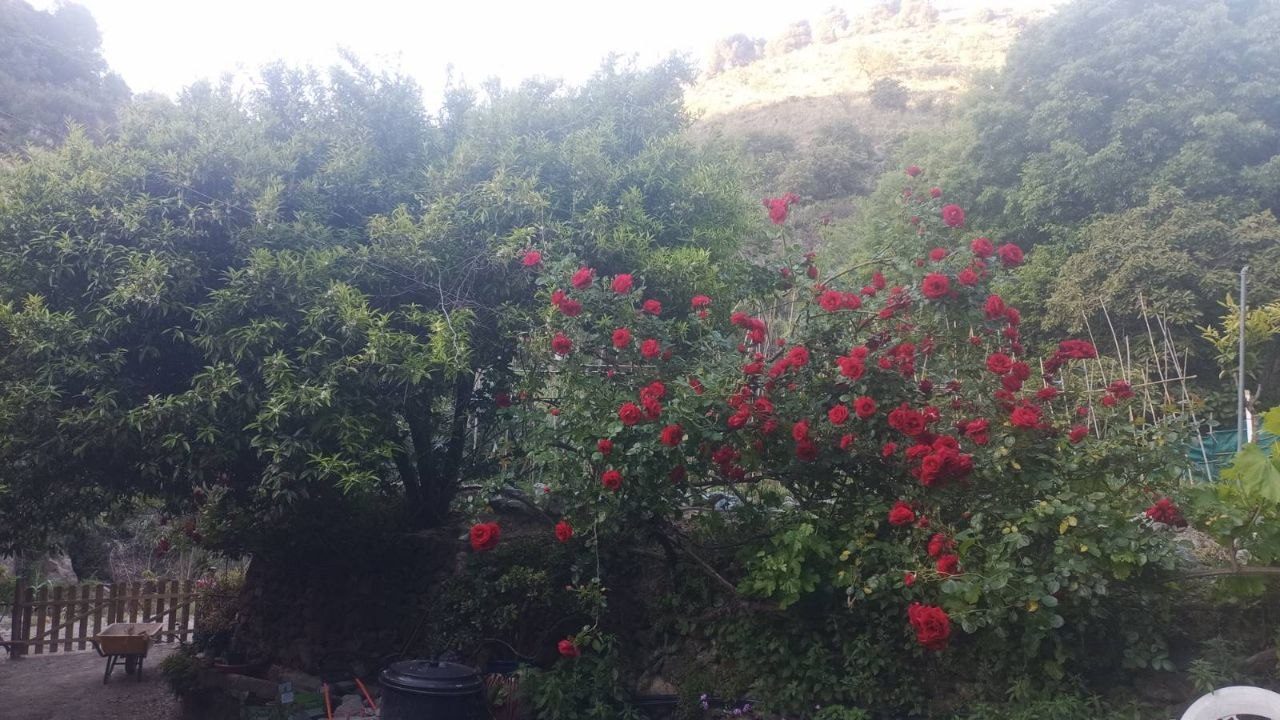
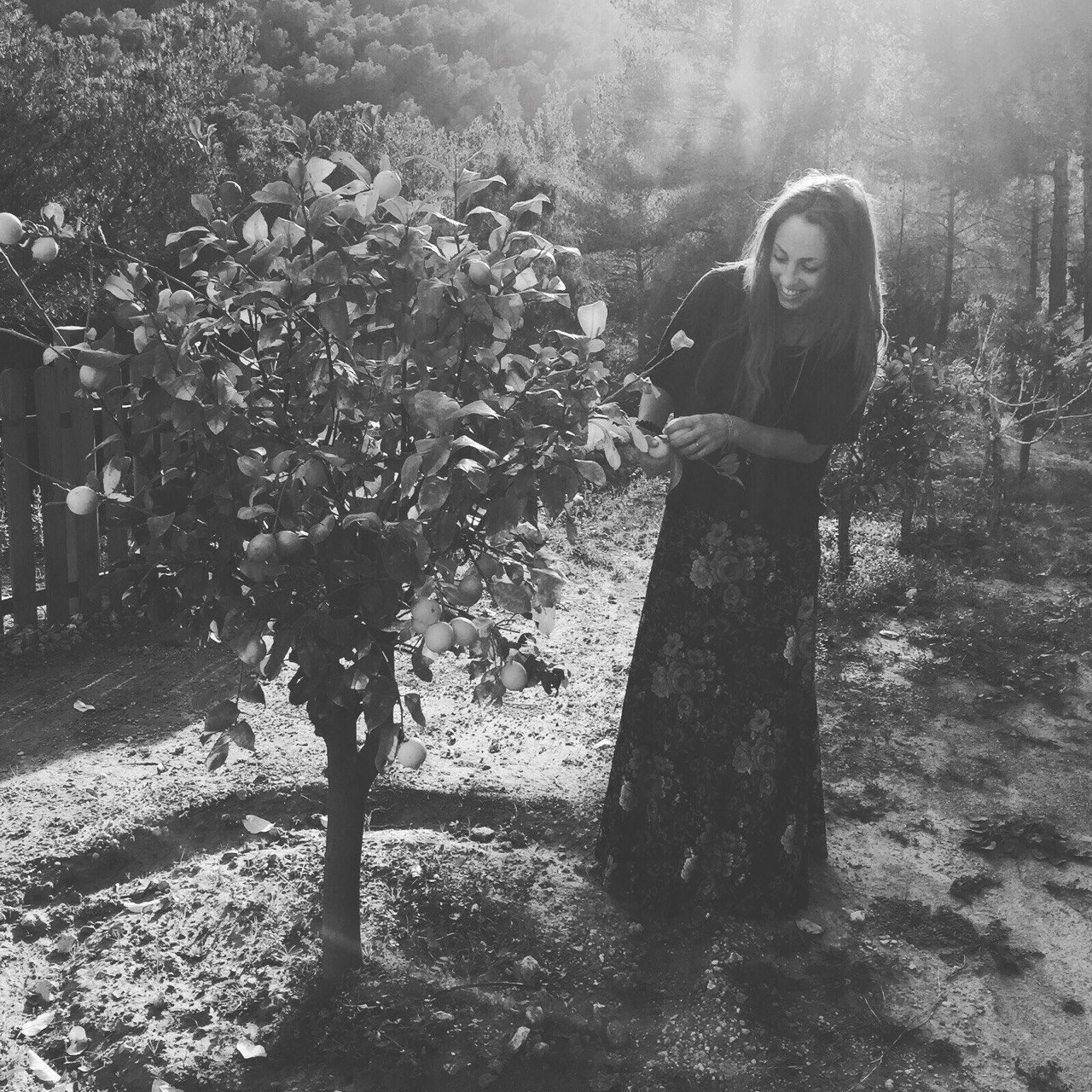
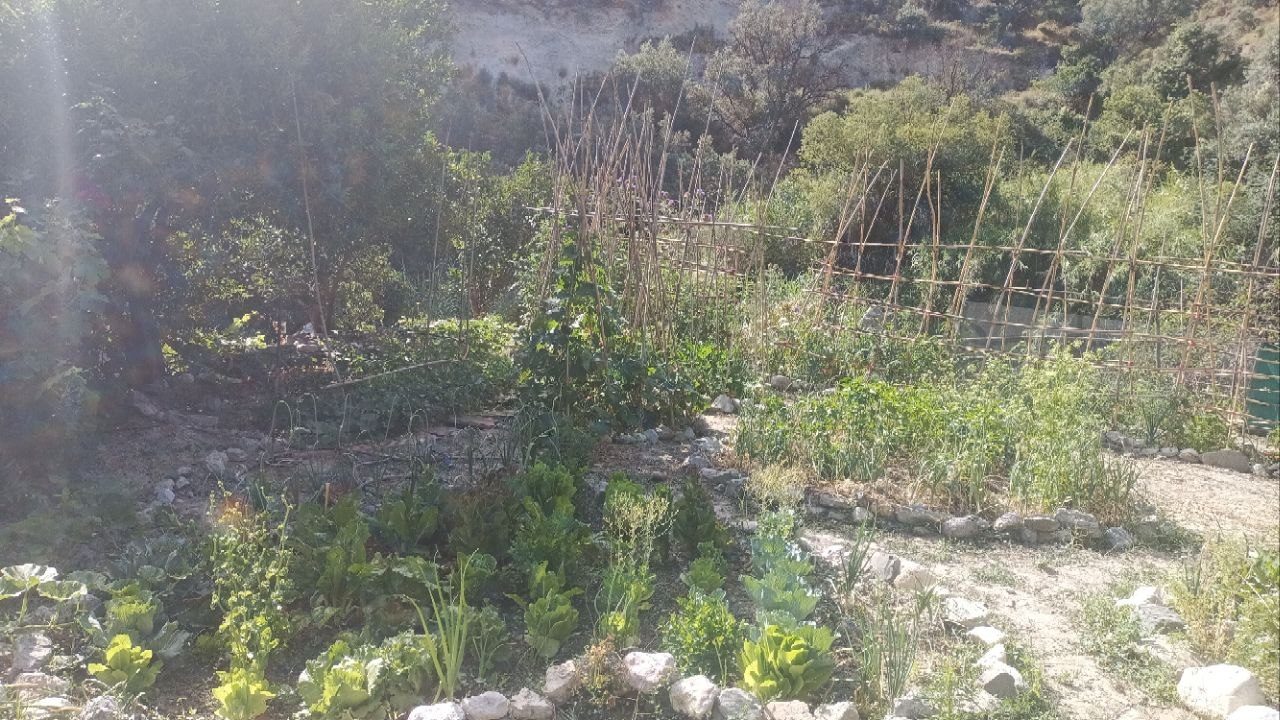
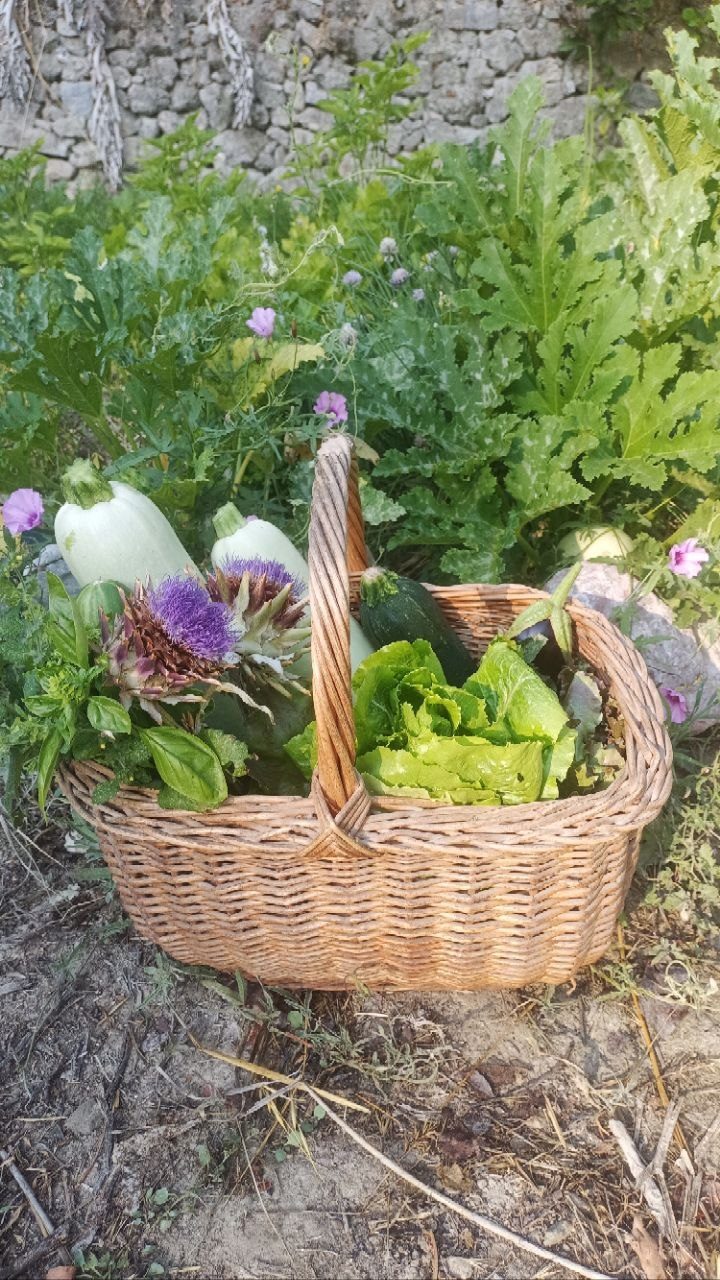
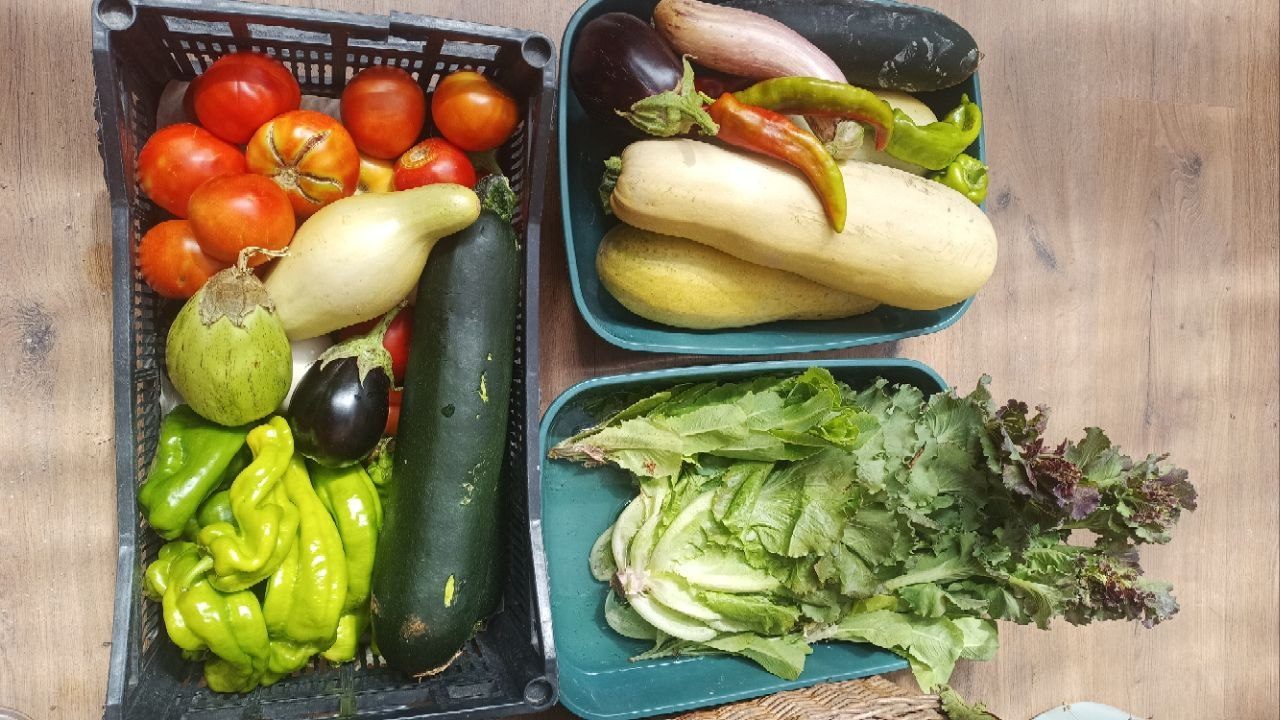
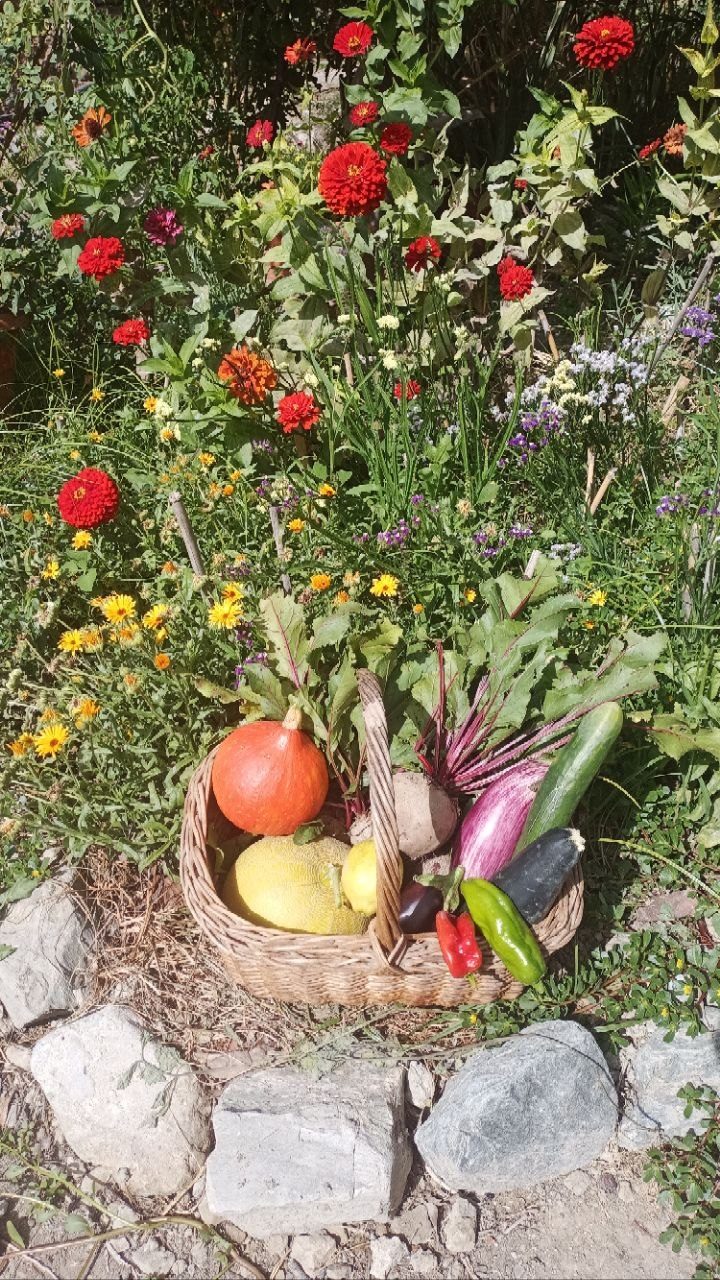
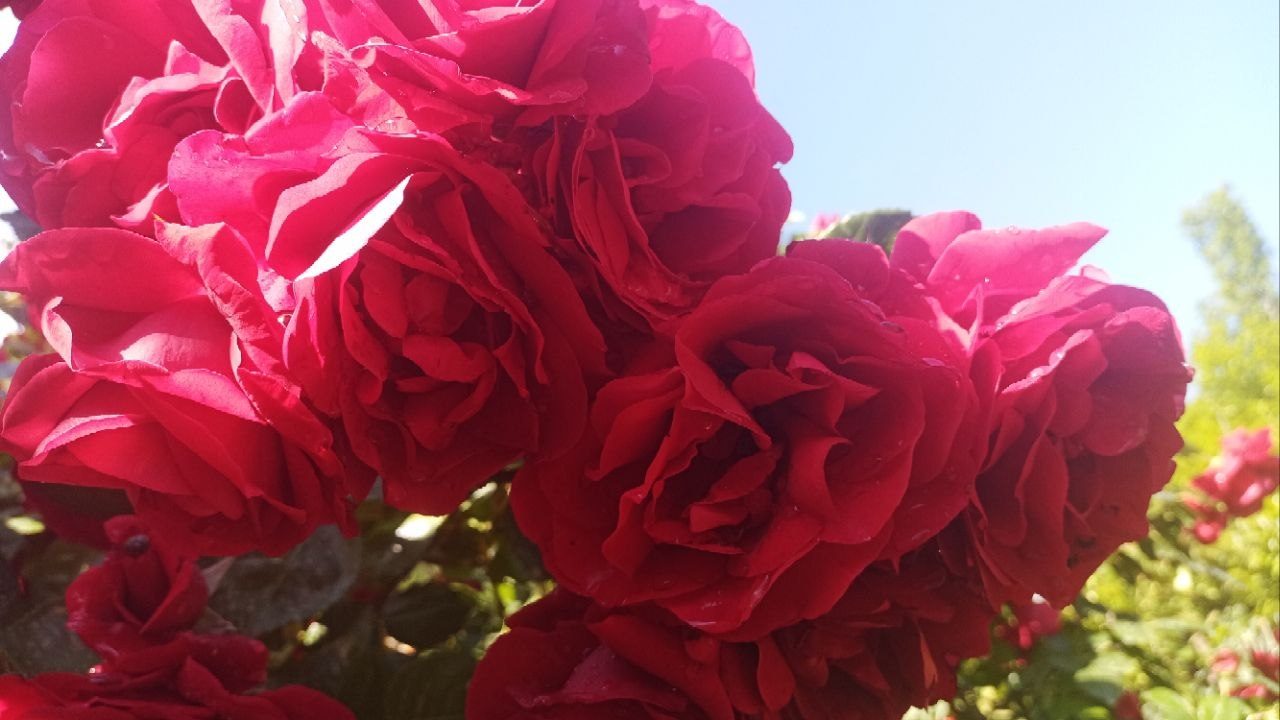
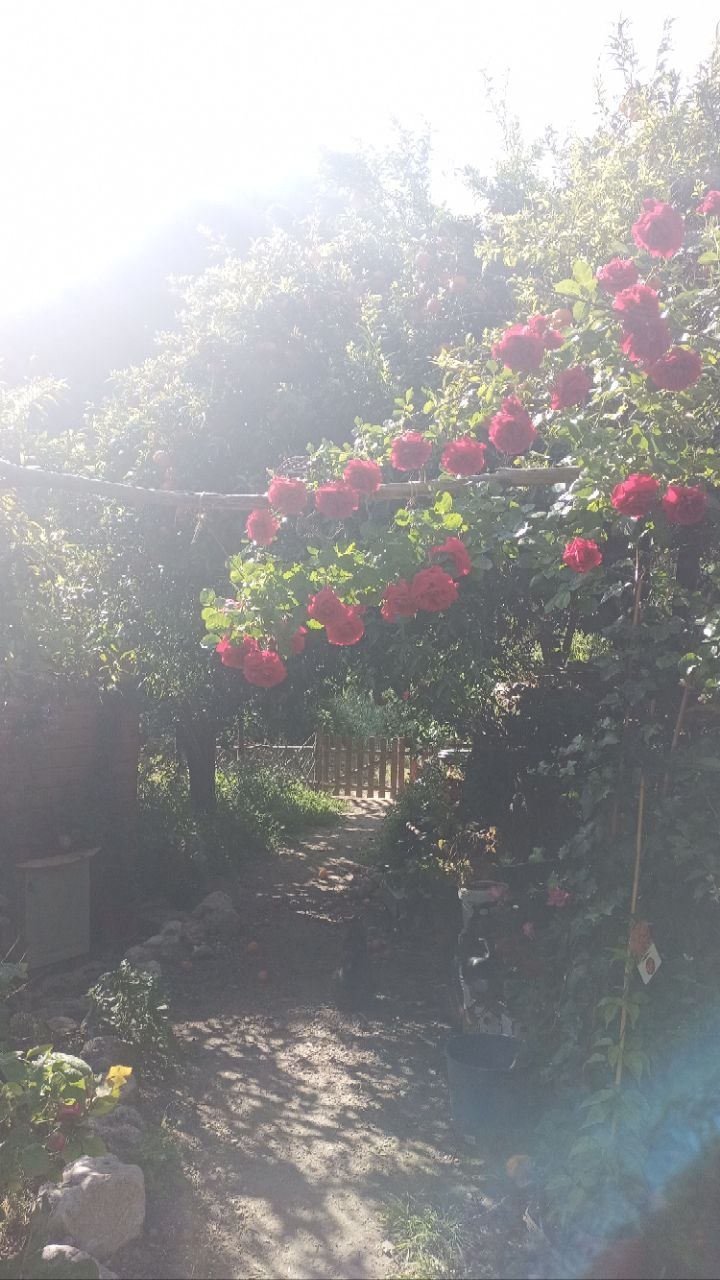
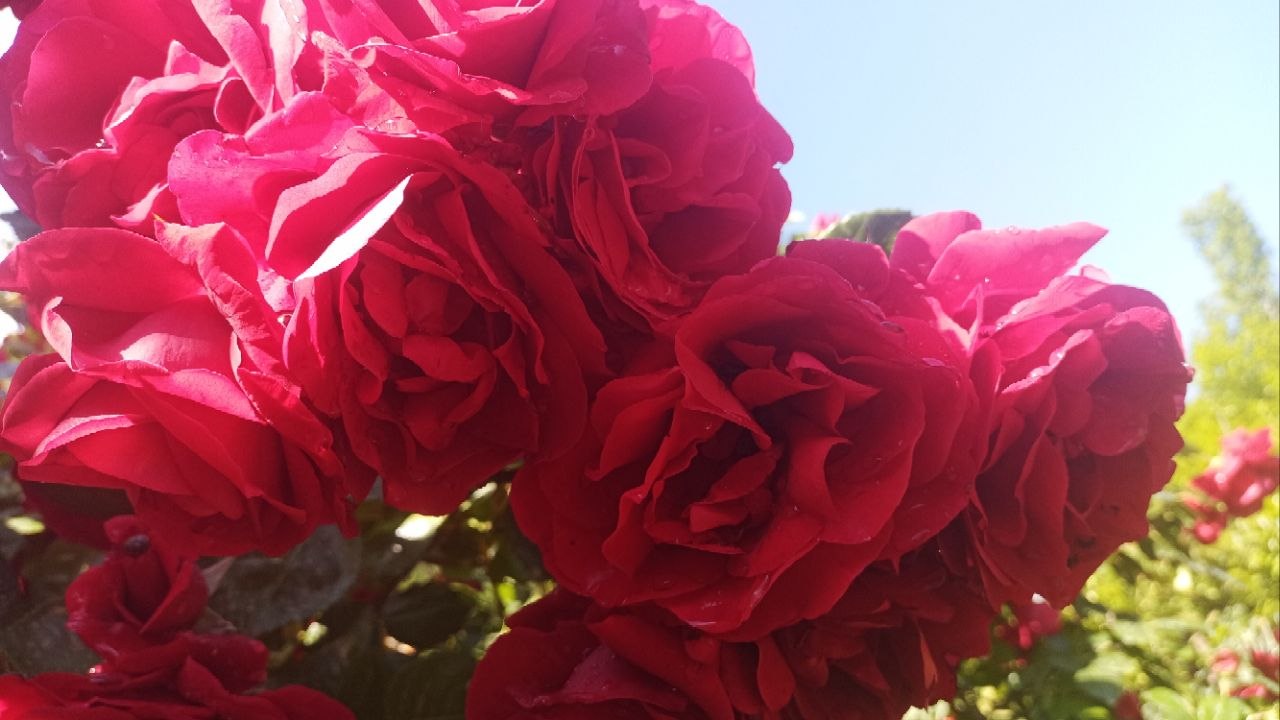
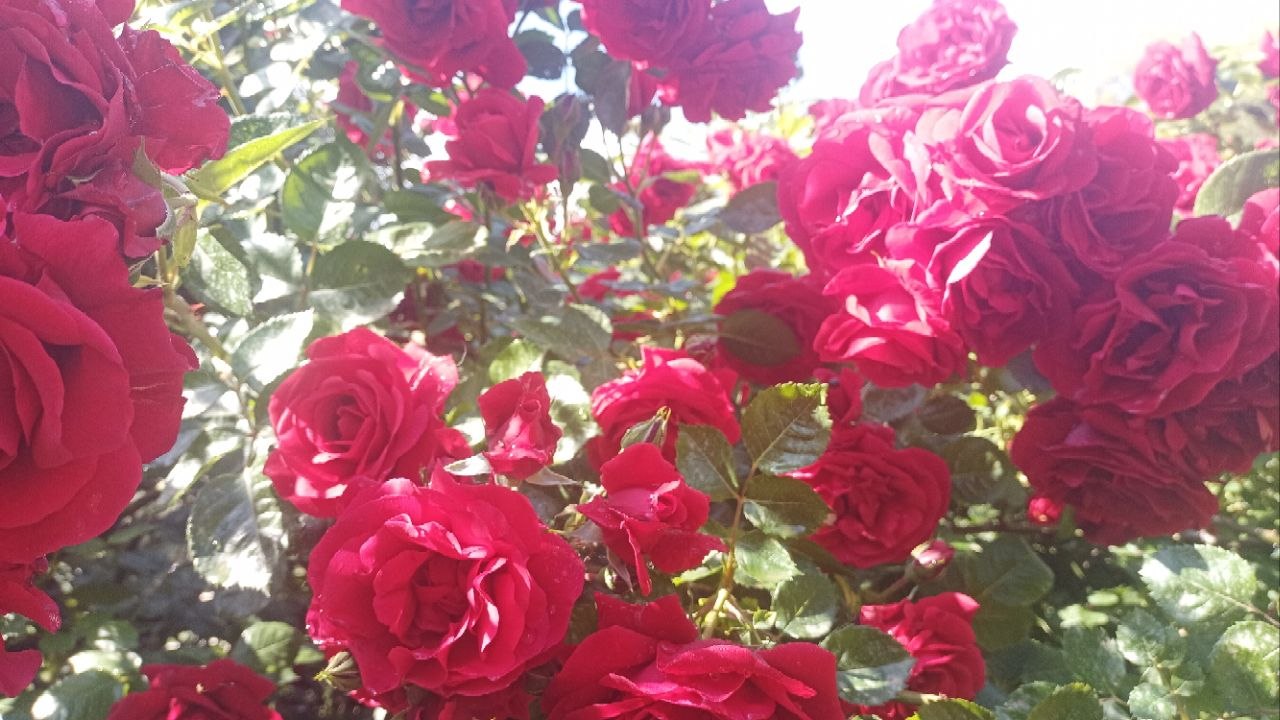
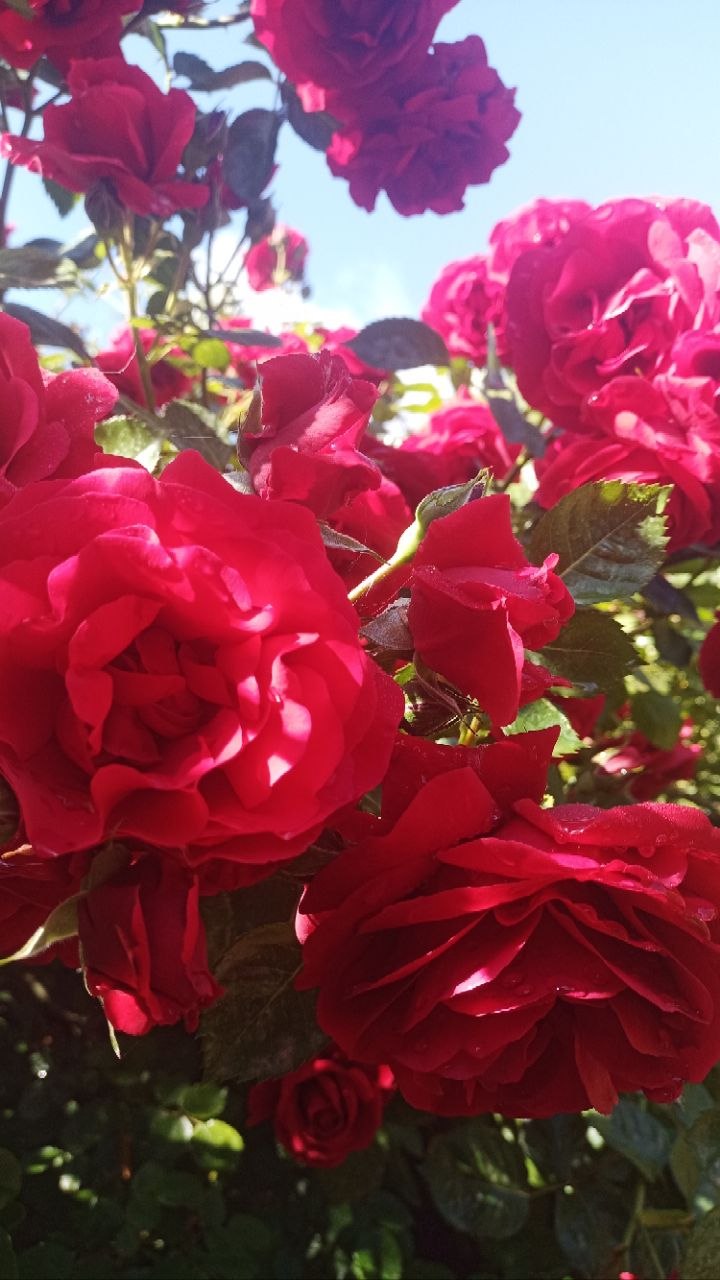
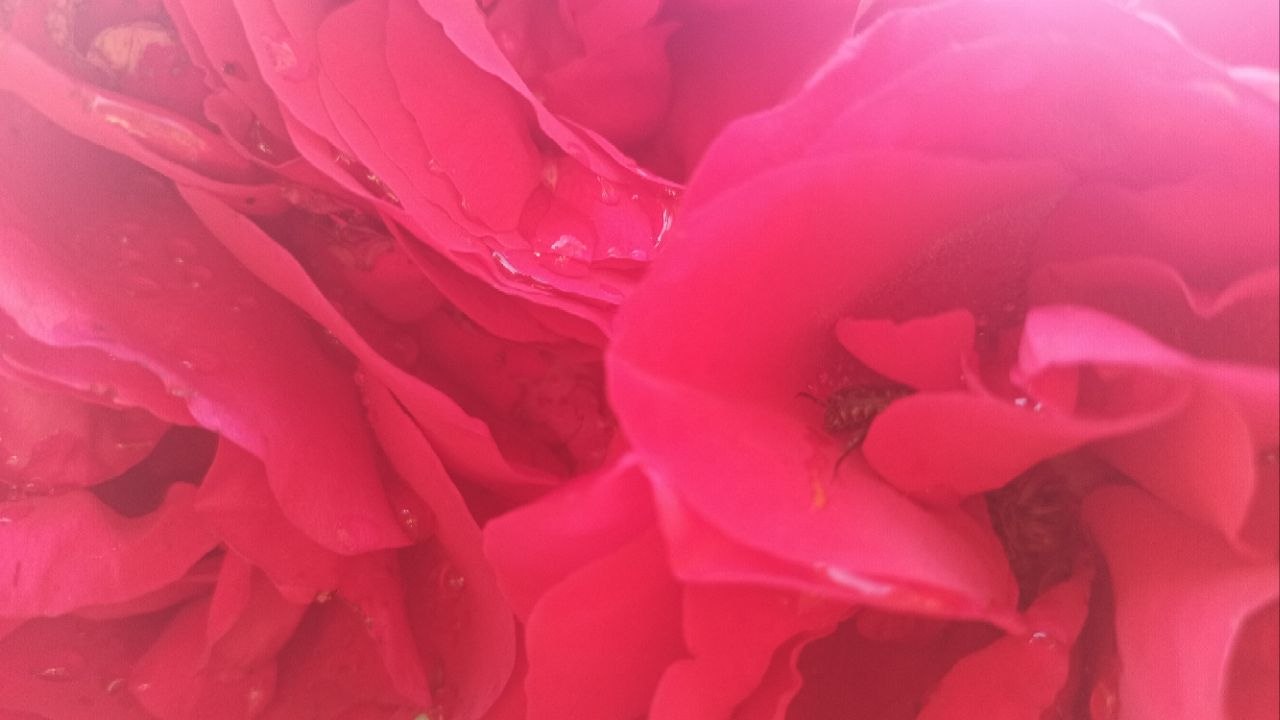
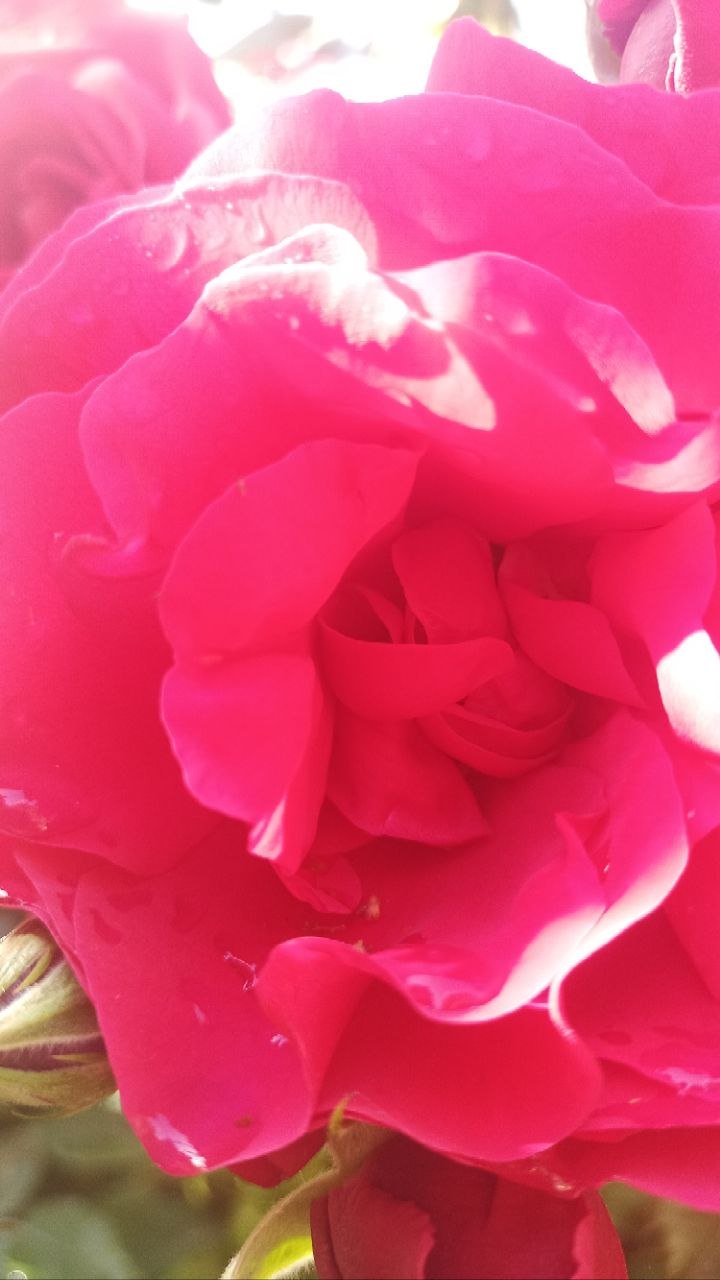
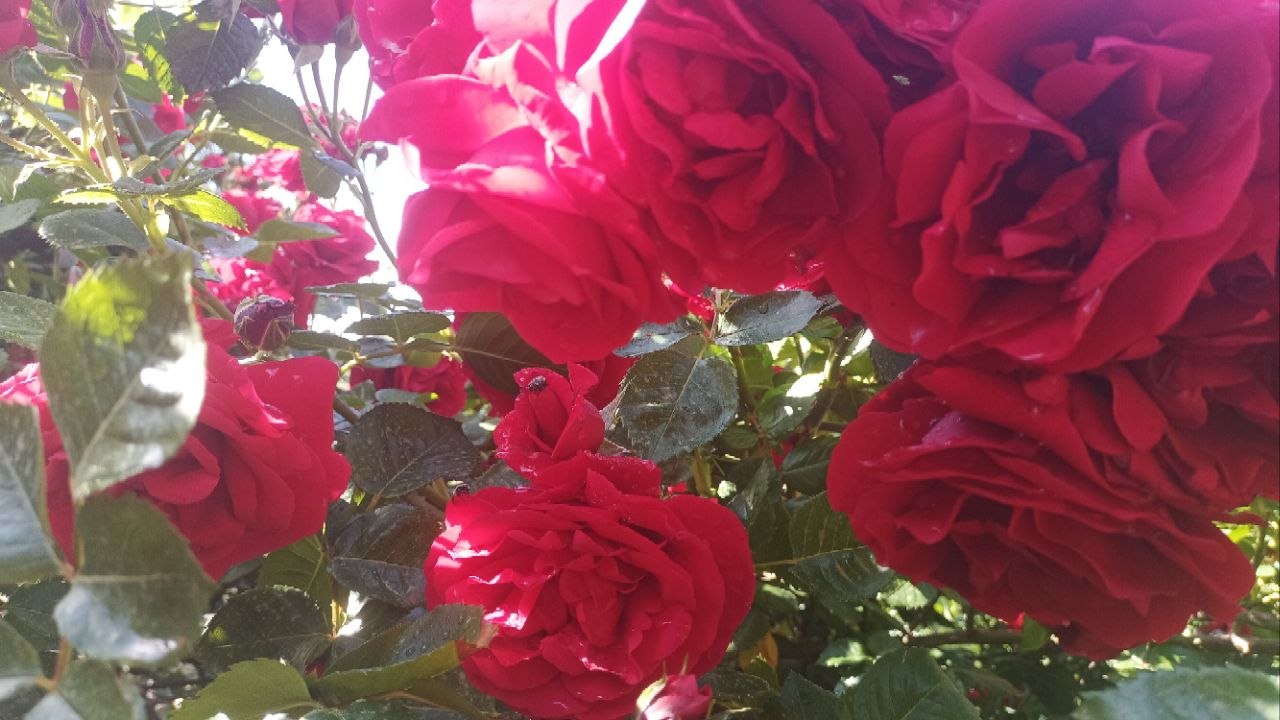
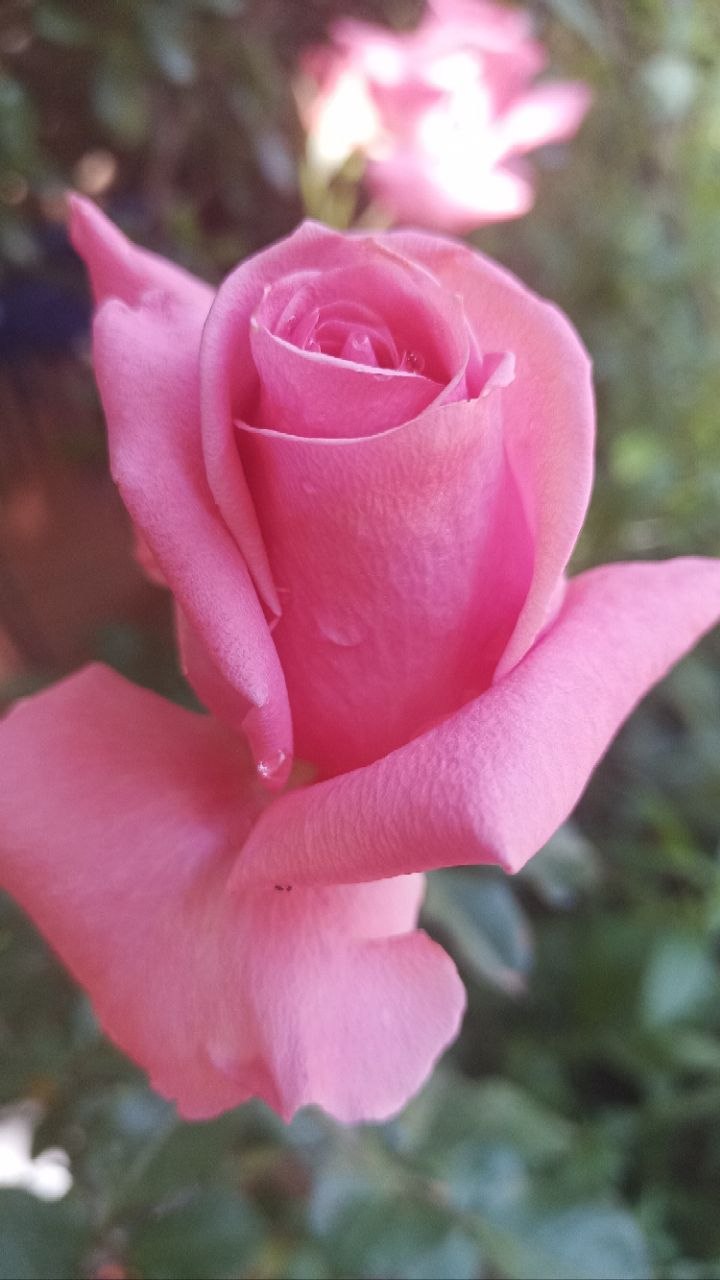
We started the vegetable garden right away. The first harvest was abundant, and we made so many people happy with it — crates full of food we gave away to friends, or to people we simply met along the way. Because food should just be freely available, especially when it is completely organic. On this whole piece of land, no poison has ever been used. It is full of roses, too. And everything we do here, we do with natural materials. We built the cabina that way too — using natural materials, taking no trees away, and working with whatever the place itself brought forward, so that we live in harmony with the whole.
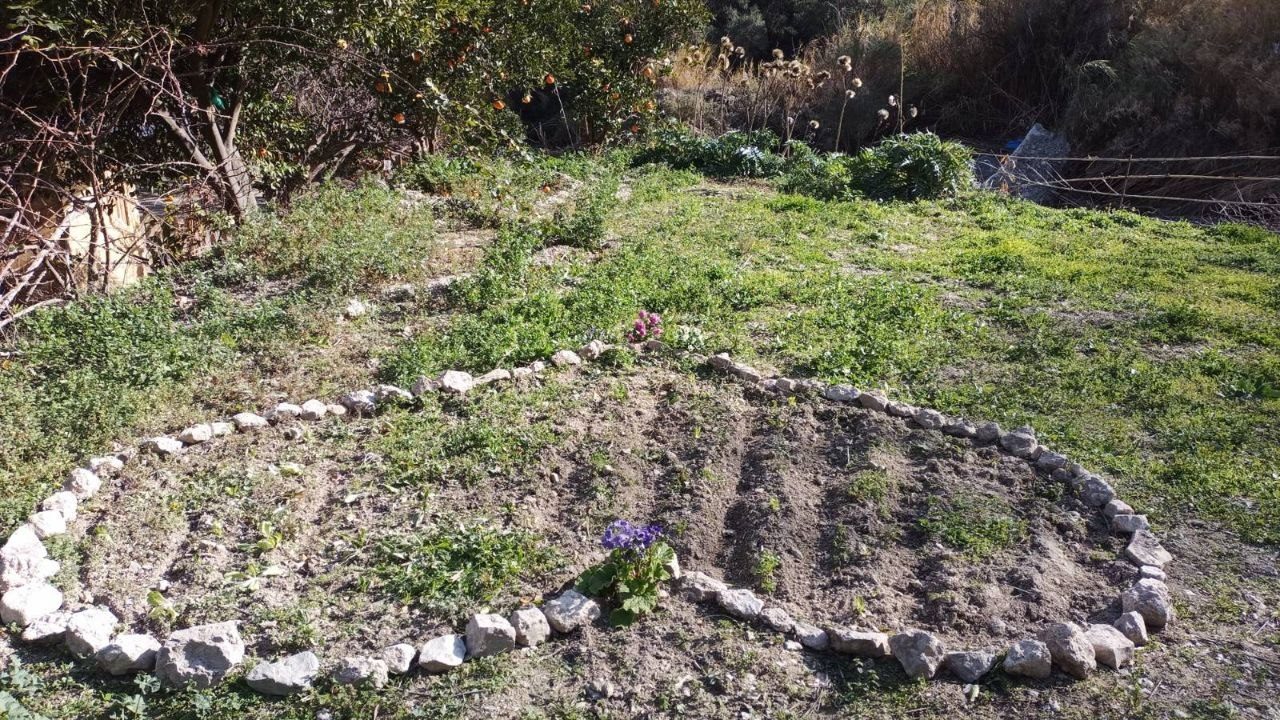
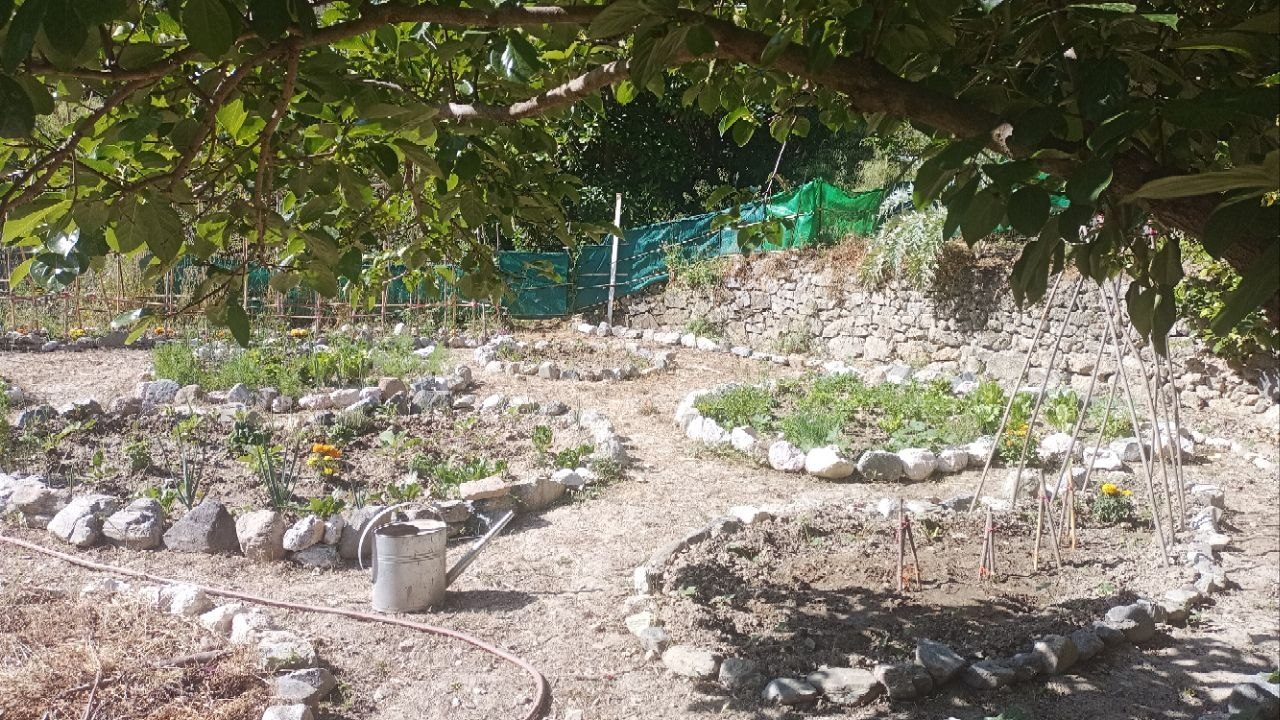
And all over the land I have laid heart shapes out of stones I collected. Every tree stands in a heart of stone, and I have laid out almost all the vegetable beds in the shape of a heart too. The farmers up above, who can look down on it, saw it clearly — and they have given the barranco a new name: Barranco de Amor, the ravine of love.
This is a very special, potent place, where the silence plays the leading role. We see something beautiful taking shape here: a place where several people can each have their own little spot, while together caring for the land. And it came up very clearly to make it a nature reserve — to protect the mountain goats, the wild boar, and the many birds. There are many hunters here, and traps are set everywhere even though it is forbidden; I have already found a wild boar or a dog too late more than once. That is exactly what makes protecting this place so urgent.
Where things stand now
Then came the DANA storm. Our road was washed away — on foot we could still reach it, but no longer by car. We were told the town hall could help, and they gave their approval. But after two months without word I went by, and the mayor said they could not approve it — because there is a cabina without permission. And that is where it all began.
Someone nearby, who had built something himself and got no permit, apparently said something about us. Suddenly the perito was here, and we were threatened with fines and the demand to tear everything down. Our situation is not simple: we lie right next to a barranco, so we can arrange nothing with the town hall until we have a yes from the Junta de Andalucía. We are still waiting for that.
It comes down to this: either we have to tear this little place down, at enormous cost and losing our roof — or, if we get a yes, we must buy several parcels of land to meet the norms so the cabina may remain. One of those parcels has a cortijo — and there we would be allowed to live. Then we stay, and keep caring: for the land, and for the animals. And in the meantime we do not stop: we are busy with the whole water system, so that next season the land can bear food, herbs and flowers again. Last season we did all the watering by hand, which was so time-consuming.
The water — and what it is really about
Bringing the water back is the heart of it. And there we run into something that says everything about the times we live in: you are not allowed to bring water from one comunidad to another. Meanwhile there are stretches of land whose spring has run dry — abandoned now, parched. And a little further along there is water to spare. We have water running over the land, under the land and around the land, twenty-four hours a day. And we may not use it.
And that water does not come from far away. It comes straight from a spring higher up in these mountains, and it does not stop. With the parcels of land we would have to buy, that spring comes along too — and that is more than a practical detail. It means the spring itself would come under protection, if we manage to bring all of this about. Not only the water that comes out of it, but the place where it wells up.
The water could be shared so easily. But it does not flow, because people are busy with the boxes and not with what is actually happening. There is no communication; everyone talks inside their own compartment. So what we hope for is not only the water flow returning to the land that has none — but with it the flow of connection and communication between the people here.
And this is not a matter of beauty or ideals. In five years there have already been two large fires in this community. Dry land is dangerous. Many owners here do have water, but are too old to care for the land any more, and their children do not want to take it over — so a great deal of land lies neglected. If fire breaks out, that puts everything and everyone in far more danger. People do not always see that this is not only for the wellbeing of nature, but for their own safety too.
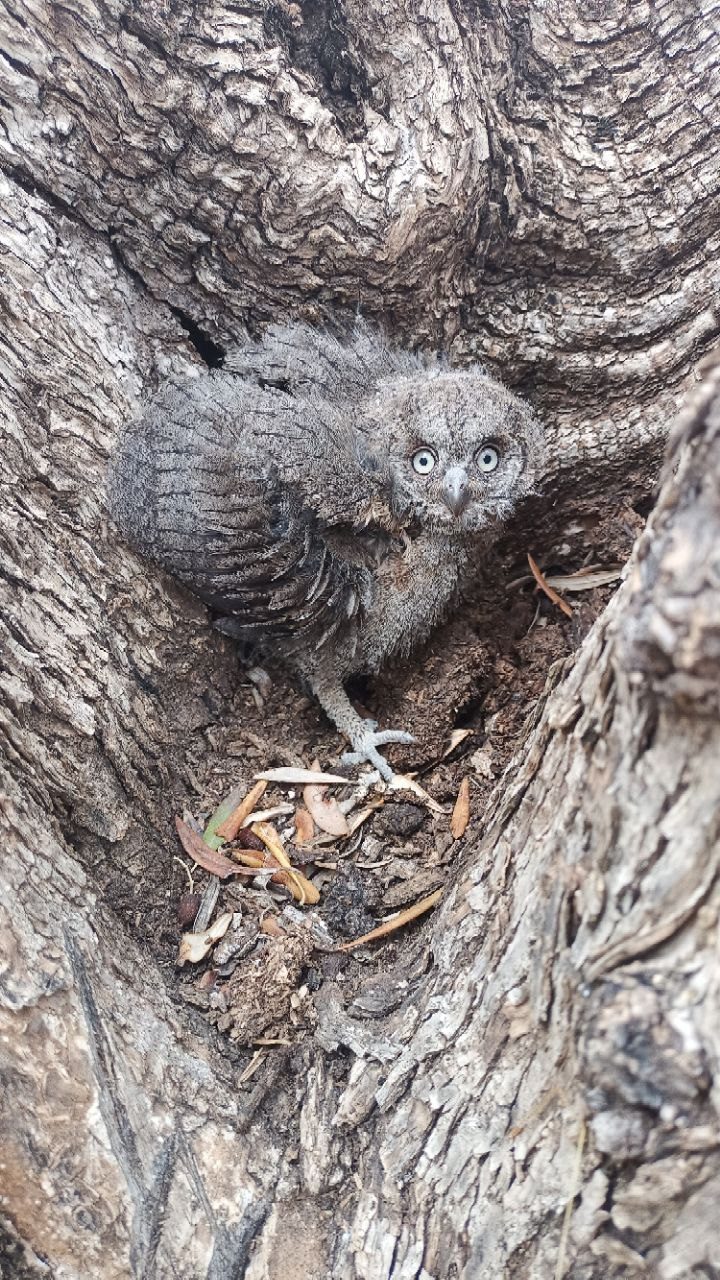
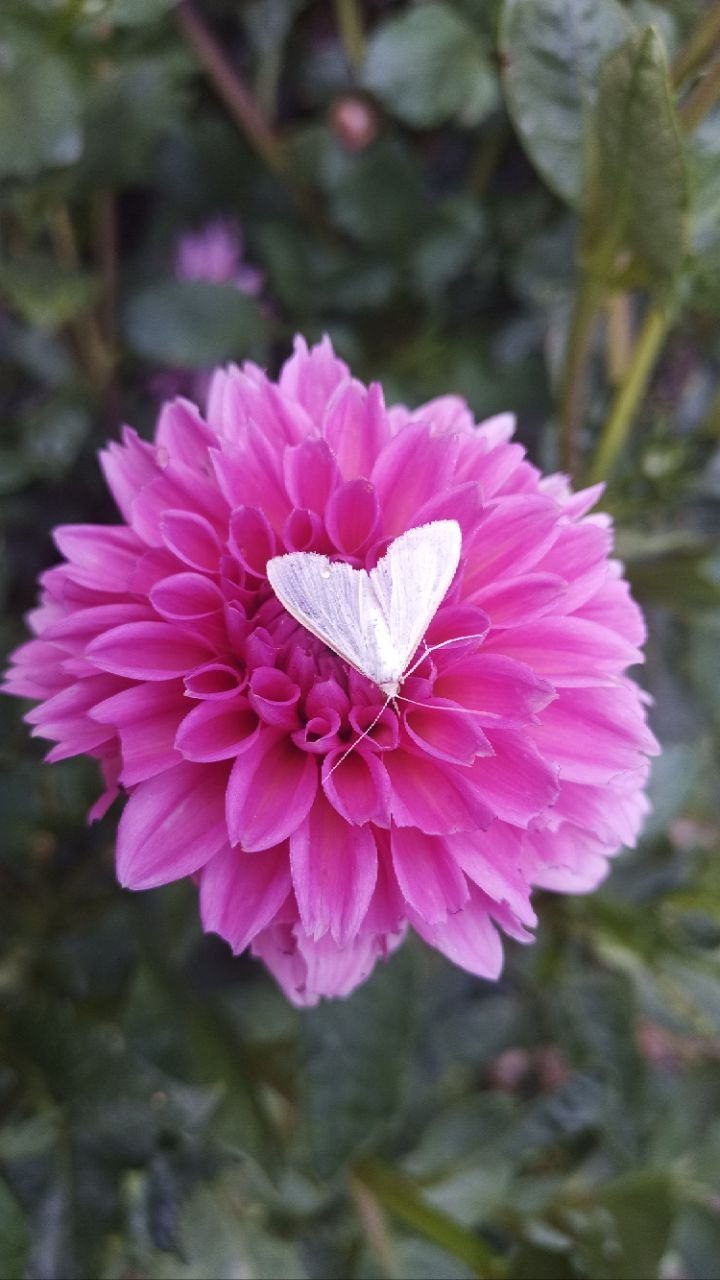
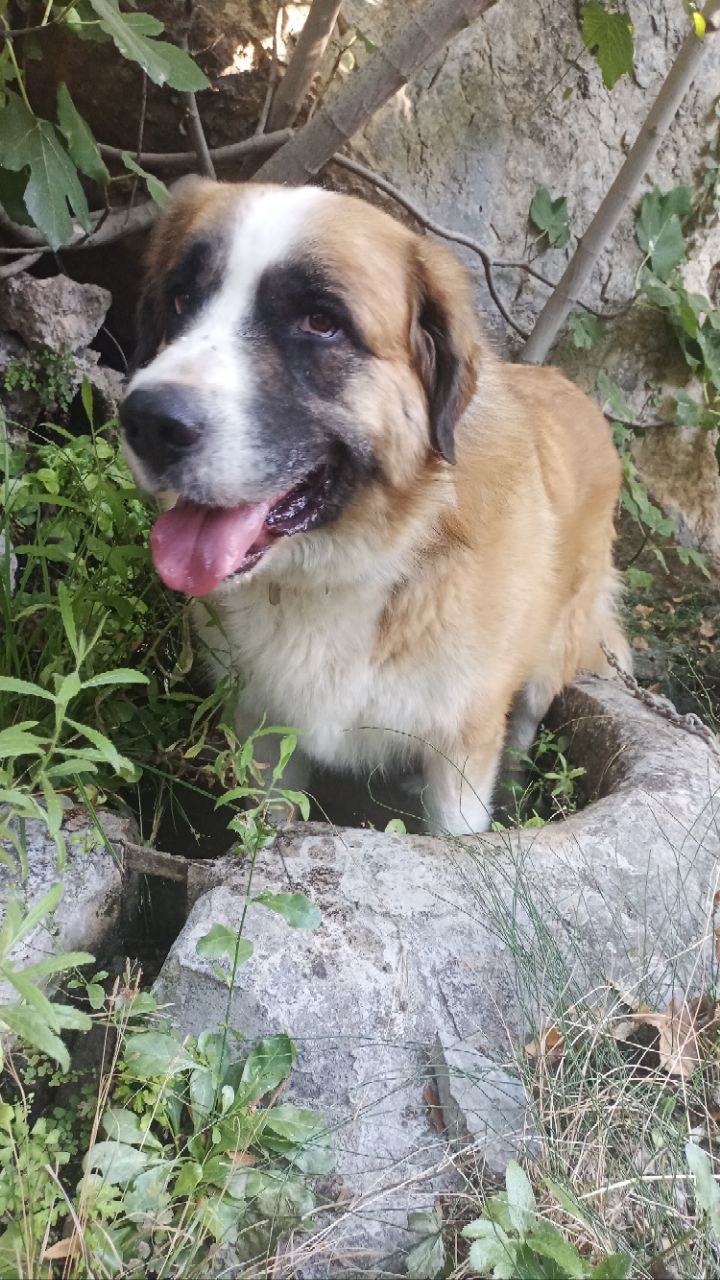
There is a great deal of life here. Mountain goats, wild boar, and so many birds. We photographed a mountain goat through the kitchen window — we live literally with and among the animals; the kittens play with the young goats. And my mother recently got to witness half a lamb’s birth — something you never forget. If this were to burn, for whatever reason, an entire flora and fauna would disappear with it.
The land — what is at stake
There is one piece of land we are seriously worried about. It belongs to the parcels we would have to buy, and the owner is thinking of pulling out all the ancient olive trees and putting walnut trees in their place. The reason is purely commercial: once walnut trees have taken root, they need almost no water. Without the water question standing in the way, the land is easier to sell in their eyes.
Let that sink in for a moment. Centuries-old olive trees gone, because water is awkward when it comes to a sale. We want to try absolutely everything to prevent that.
And why two and a half hectares, exactly? This sounds technical, but it is precisely why we need these parcels. Below that limit a different logic applies: with some five thousand square metres you may put up a cabina or cortijo, but then you have to register as agricultura. You work the land, with fruit or olive trees, and every time you have to justify what you are doing and how much you produce — because the yield then counts as more than personal use. Go above two and a half hectares and that whole reasoning simply falls away. Then there is nothing left to justify, and a house may stand there without having to be tied to agriculture.
And there is something else, very practical. Right now our land can only be reached by way of the barranco. When it rains hard we cannot cross it — and then we cannot get off the land at all. With the other parcels we also get access from above: two ways in instead of one. At moments like that, it makes all the difference.
This is the first round. The second is that everything comes to stand in one name — no longer separate parcels, but one whole. And then we can lay an alberca at the top, a water catchment with the pipes that go with it, so that we can catch all the water and give it back to the whole of the land.
Our situation is not a pleasant one. But in everything that is happening now and everything we need, there lies at the same time a real possibility: to protect this place, and to bring the water back where it belongs.
The birds — why this particular spot counts
Where we are there is no phone reception. You cannot make a call here; for that you have to climb higher up the mountain. It is genuinely a sheltered place, held in the arms of the mountains. And places like that are what is left.
Because the birds are disappearing. That is not a feeling — it has been measured. Researchers followed 170 common bird species at more than 20,000 sites across 28 European countries, over 37 years, from 1980 to 2016. All birds together declined by a quarter. Farmland birds: down 56.8 per cent — more than halved.
A separate European count shows what that means in numbers: since 1980 the EU has lost between 560 and 620 million breeding birds — roughly one in six. The house sparrow alone accounts for 247 million fewer, about half of what there was. The starling 75 million fewer. The skylark 68 million.
So if you think it has grown quieter: you are right. You are not imagining it.
And the cause has been measured too. The researchers point to agricultural intensification as the main pressure — pesticide and fertiliser use in particular. Weighing more heavily than urbanisation, than forest change, than rising temperature. And hardest of all on the species that live on insects.
Here in Spain it is sharper still. Farmland birds declined by 27 per cent in under thirty years. The skylark by 35 per cent nationally — and by nearly 80 per cent in the southern half of the country, exactly where we live.
That is why a quiet, poison-free place held by mountains matters. No poison has ever been used here. Here there are insects, and so there is food, and so there are birds. It is small — but it is precisely what is vanishing.
Sources: Rigal et al., PNAS (2023), DOI 10.1073/pnas.2216573120 · Burns et al., Ecology and Evolution (2021), DOI 10.1002/ece3.8282 · SEO/BirdLife, III Atlas de las Aves en Época de Reproducción en España (2022).
And here is something hopeful: the parcels we would have to buy in order to meet the rules already bring water back to a large part of the land around us. So that step is not only about permits. It is a real step for the whole valley.
We hope to get this moving together with the right people, so that something genuinely changes here.
Ik ontmoette dit land op een heel bijzondere manier. Ik stond bovenop de berg en keek naar beneden, en zag door de bomen een klein open puntje. Iets in mijn hart wist het meteen: dit is bijzonder. Alsof iets wat ik altijd al voelde en wist ineens vorm had gekregen, zichtbaar voor mijn ogen. En toen ik er aankwam, was het een thuiskomst.
Het land communiceerde met me. Het zei: ik zorg voor jullie, en jullie zorgen voor mij. Dat we het water zouden terugbrengen, en voedsel zouden verbouwen voor de lokale gemeenschap — omdat dat in de nabije toekomst zo belangrijk gaat zijn. We vonden de eigenaar, en die gaf het ons praktisch cadeau.
En ik doe dit niet alleen: ik doe het samen met mijn moeder. Dat maakt het extra bijzonder — moeder en dochter die samen voor dit land zorgen, en voor alles wat er leeft.
We hadden geen geld om iets te kopen, en tóch viel alles op zijn plek. De vorige eigenaar zei: waarom zet je de cabina niet op het land? En zo gebeurde het — de volgende dag kwam het houten huisje al aan. We hadden niet eens de intentie om er te gaan wonen. Alles wees vanzelf de weg.
We zijn meteen begonnen met de moestuin. De eerste oogst was overvloedig, en we hebben er heel veel mensen blij mee gemaakt — kratten vol eten die we weggaven aan vrienden, of aan mensen die we zomaar tegenkwamen. Want voeding hoort gewoon vrij beschikbaar te zijn, zeker als het volledig biologisch is. Op dit hele land is nog nooit enig gif gebruikt. Het staat ook vol met rozen. En alles wat we hier doen, doen we met natuurlijke materialen. Ook de cabina hebben we zo gebouwd — met natuurlijke materialen, zonder bomen weg te nemen, en in verbinding met wat de plek zelf naar voren bracht, zodat we in harmonie zijn met het geheel.
En overal op het land heb ik van verzamelde stenen hartvormen gelegd. Elke boom staat in een hart van steen, en ook de groenteplekken heb ik bijna allemaal in de vorm van een hart aangelegd. De boeren boven, die naar beneden kijken, zagen het goed — en ze hebben de barranco een nieuwe naam gegeven: Barranco de Amor, het ravijn van de liefde.
Dit is een heel bijzondere, potente plek, waar de stilte de hoofdrol speelt. We zien hier iets moois ontstaan: een plek waar meerdere mensen ieder hun eigen plekje kunnen hebben, terwijl je samen zorg draagt voor het land. En het kwam heel duidelijk naar boven om er een natuurgebied van te maken — om de berggeitjes, de zwijntjes en de vele vogels te beschermen. Er zijn hier veel jagers, en overal worden vallen gezet ook al is het verboden; ik heb al een paar keer een zwijntje of een hond te laat gevonden. Juist dat maakt het beschermen van deze plek zo urgent.
Waar we nu staan
Toen kwam de DANA-storm. Onze weg werd weggeslagen — te voet konden we er nog bij, met de auto niet meer. De gemeente kon ons helpen, en gaf akkoord. Maar na twee maanden zonder bericht ben ik langsgegaan, en zei de burgemeester dat ze geen akkoord konden geven — omdat er een cabina staat zonder toestemming. En daar begon alles.
Iemand in de buurt, die zelf iets had gebouwd en geen vergunning kreeg, heeft blijkbaar iets over ons gezegd. Ineens stond de perito hier, en werden we bedreigd met boetes en de eis om alles af te breken. Onze situatie is niet eenvoudig: we liggen vlak bij een barranco, dus we kunnen niets met de gemeente regelen totdat we een ja hebben van de Junta de Andalucía. Daar wachten we nog op.
Het komt hierop neer: óf we breken dit plekje af, wat ontzettend veel geld kost en waardoor we ons dak kwijtraken — óf, als we een ja krijgen, moeten we meerdere stukken land aankopen om aan de normen te voldoen zodat de cabina mag blijven. Eén van die stukken heeft een cortijo — en daar zouden we wél mogen wonen. Dan blijven we, en kunnen we blijven zorgen: voor het land, en voor de dieren. En ondertussen stoppen we niet: we zijn volop bezig met de wateraanleg, zodat het land volgend seizoen weer voedsel, kruiden en bloemen kan dragen. Vorig seizoen deden we al het water met de hand, en dat was zó tijdrovend.
Het water — en waar het werkelijk om gaat
Het water terugbrengen is de kern van alles. En juist daar lopen we tegen iets aan dat alles zegt over de tijd waarin we leven: je mag geen water van de ene comunidad naar de andere brengen. Ondertussen liggen er stukken land waarvan de bron is opgedroogd — nu helemaal verlaten en uitgedroogd. En even verderop is water over. Bij ons loopt het water vierentwintig uur per dag over het land, onder het land en om het land heen. En we mogen het niet gebruiken.
En dat water komt niet van ver. Het komt rechtstreeks uit een bron hoger in deze bergen, en het houdt niet op. Bij de stukken land die we zouden moeten aankopen hoort die bron er ook bij — en dat is meer dan een praktisch detail. Het betekent dat de bron zélf mee onder bescherming komt, als we dit allemaal voor elkaar krijgen. Niet alleen het water dat eruit komt, maar de plek waar het opwelt.
Het water zou zo makkelijk verdeeld kunnen worden. Maar het loopt niet, omdat mensen bezig zijn met de hokjes en niet met wat er daadwerkelijk aan de hand is. Er wordt niet gecommuniceerd; iedereen praat binnen zijn eigen hokje. Dus wat we hopen is niet alleen dat de waterstroom terugkomt naar het land dat geen water heeft — maar dat daarmee ook de stroom van verbinding en communicatie tussen de mensen hier weer op gang komt.
En dit gaat niet over mooie idealen. In vijf jaar tijd zijn er in deze gemeenschap al twee grote branden geweest. Droog land is levensgevaarlijk. Veel eigenaren hier hébben water, maar kunnen door hun leeftijd niet meer voor het land zorgen, en hun kinderen willen het niet overnemen — dus ligt er heel veel land volledig verwaarloosd. Breekt er brand uit, dan brengt dat alles en iedereen in nog veel groter gevaar. Mensen zien niet altijd dat dit niet alleen voor het welzijn van de natuur is, maar net zo goed voor hun eigen veiligheid.
Er leeft hier ontzettend veel. Bergegeiten, wilde zwijnen, en zoveel vogels. We hebben een bergeit gefotografeerd door het keukenraam — we leven hier letterlijk mét en tussen de dieren; de katjes spelen met de jonge geitjes. En mijn moeder mocht laatst een halve bevalling van een lammetje meemaken — zoiets vergeet je nooit meer. Zou dit om wat voor reden dan ook afbranden, dan verdwijnt daarmee een hele flora en fauna.
Het land — wat er op het spel staat
Er is één stuk land waar we ons grote zorgen over maken. Het hoort bij de percelen die we zouden moeten aankopen, en de eigenaar denkt erover om alle oude olijfbomen eruit te halen en er notenbomen voor in de plaats te zetten. De reden is puur commercieel: notenbomen hebben, zodra ze eenmaal geworteld zijn, nauwelijks water nodig. Zonder het waterthema is het land in hun ogen makkelijker te verkopen.
Laat dat even landen. Eeuwenoude olijfbomen weg, omdat water lastig staat bij een verkoop. Wij willen werkelijk alles proberen om dat te voorkomen.
En waarom juist tweeënhalve hectare? Dit klinkt technisch, maar het is precies waarom we deze stukken nodig hebben. Onder die grens geldt er een andere logica: met zo'n vijfduizend vierkante meter mag je eventueel een cabina of cortijo neerzetten, maar dan moet je je inschrijven als agricultura. Je werkt het land, met fruit- of olijfbomen, en je moet telkens verantwoorden wát je doet en hoevéél je produceert — want de opbrengst geldt dan als meer dan eigen gebruik. Kom je boven de tweeënhalve hectare, dan vervalt die hele redenering ineens. Dan hoeft er niets meer verantwoord te worden, en mag er een huis staan zonder dat het aan landbouw gekoppeld hoeft te zijn.
En er is nog iets, heel praktisch. Nu is ons land alleen te bereiken via de barranco. Als het hard regent kunnen we die niet oversteken — en dan komen we het land niet af. Met de andere stukken erbij krijgen we ook toegang van bovenaf: twee ingangen in plaats van één. Dat maakt op zulke momenten het verschil.
Dit is de eerste ronde. De tweede is dat alles op één naam komt te staan — geen losse percelen meer, maar één geheel. En dan kunnen we bovenaan een alberca aanleggen, een wateropvang met de leidingen erbij, zodat we al het water kunnen opvangen en het aan het hele land kunnen teruggeven.
Onze situatie is niet prettig. Maar bij alles wat er nu gebeurt en alles wat we nodig hebben, ligt hier tegelijk een echte mogelijkheid: om deze plek te beschermen, en het water terug te brengen waar het hoort.
De vogels — waarom juist dít plekje telt
Op ons plekje is geen telefoonbereik. Je kunt hier niet bellen; daarvoor moet je hoger de berg op. Het is werkelijk een beschermd plekje, omarmd door de bergen. En juist zulke plekken zijn wat er nog over is.
Want de vogels verdwijnen. Dat is niet een gevoel — het is gemeten. Onderzoekers volgden 170 algemene vogelsoorten op ruim 20.000 meetpunten in 28 Europese landen, 37 jaar lang, van 1980 tot 2016. Alle vogels samen gingen met een kwart achteruit. De vogels van het boerenland: min 56,8 procent — meer dan gehalveerd.
Een aparte Europese telling laat zien wat dat in aantallen betekent: sinds 1980 verloor de EU tussen de 560 en 620 miljoen broedvogels — ongeveer één op de zes. De huismus alleen al telt 247 miljoen minder, ongeveer de helft van wat er was. De spreeuw 75 miljoen minder. De veldleeuwerik 68 miljoen.
Dus als je denkt dat het stiller is geworden: je hebt gelijk. Je verbeeldt het je niet.
En de oorzaak is óók gemeten. De onderzoekers wijzen landbouwintensivering aan als de voornaamste druk — met name het gebruik van bestrijdingsmiddelen en kunstmest. Zwaarder wegend dan verstedelijking, dan verandering van bos, dan temperatuurstijging. En het hardst voor de soorten die van insecten leven.
En hier in Spanje is het nog scherper. Boerenlandvogels gingen in minder dan dertig jaar met 27 procent achteruit. De veldleeuwerik met 35 procent in het hele land — en met bijna 80 procent in de zuidelijke helft, precies waar wij wonen.
Dáárom telt zo'n stil, giftvrij, door bergen omarmd plekje. Hier is nooit gif gebruikt. Hier zijn insecten, en dus voedsel, en dus vogels. Het is klein — maar het is precies wat er verdwijnt.
Bronnen: Rigal e.a., PNAS (2023), DOI 10.1073/pnas.2216573120 · Burns e.a., Ecology and Evolution (2021), DOI 10.1002/ece3.8282 · SEO/BirdLife, III Atlas de las Aves en Época de Reproducción en España (2022).
En hier zit iets hoopvols in: de stukken land die we zouden moeten aankopen om aan de regels te voldoen, brengen nú al water terug naar een groot deel van het land om ons heen. Die stap gaat dus niet alleen over vergunningen. Het is een echte stap voor de hele vallei.
We hopen dit samen met de juiste mensen op gang te krijgen, zodat er hier werkelijk iets verandert.
Conocí esta tierra de una manera muy especial. Estaba en lo alto de la montaña, mirando hacia abajo, y entre los árboles vi un pequeño claro. Algo en mi corazón lo supo enseguida: esto es especial. Como si algo que siempre había sentido y sabido hubiera tomado forma de repente, visible ante mis ojos. Y cuando llegué, fue un regreso a casa.
La tierra se comunicó conmigo. Dijo: yo cuidaré de vosotras, y vosotras cuidaréis de mí. Que traeríamos el agua de vuelta, y cultivaríamos alimento para la comunidad local — porque eso va a ser muy importante en el futuro cercano. Encontramos al dueño, y prácticamente nos la regaló.
Y no lo hago sola: lo hago junto con mi madre. Eso lo hace aún más especial — madre e hija cuidando juntas de esta tierra, y de todo lo que vive en ella.
No teníamos dinero para comprar nada, y aun así todo encajó. El dueño anterior dijo: ¿por qué no ponéis la cabina en la tierra? Y así ocurrió — al día siguiente ya llegó la casita de madera. Ni siquiera teníamos la intención de vivir allí. Todo fue mostrando el camino por sí solo.
Empezamos enseguida con el huerto. La primera cosecha fue abundante, e hicimos felices a muchísimas personas — cajas llenas de comida que regalamos a amigos, o a gente que nos encontrábamos por el camino. Porque el alimento debería estar disponible de forma libre, y más aún cuando es completamente ecológico. En toda esta tierra nunca se ha usado ningún veneno. Está lleno de rosas, además. Y todo lo que hacemos aquí lo hacemos con materiales naturales. También la cabina la construimos así — con materiales naturales, sin quitar ningún árbol, y en conexión con lo que el propio lugar ofrecía, para vivir en armonía con el conjunto.
Y por toda la tierra he formado corazones con piedras que fui recogiendo. Cada árbol está dentro de un corazón de piedra, y casi todos los bancales también los he hecho en forma de corazón. Los agricultores de arriba, que pueden mirar hacia abajo, lo vieron claramente — y le han dado un nuevo nombre al barranco: Barranco de Amor.
Este es un lugar muy especial y potente, donde el silencio juega el papel principal. Vemos surgir aquí algo hermoso: un lugar donde varias personas pueden tener cada una su propio rincón, mientras cuidáis juntos de la tierra. Y surgió con mucha claridad la idea de convertirlo en un espacio natural protegido — para proteger a las cabras montesas, a los jabalíes y a las muchas aves. Hay muchos cazadores aquí, y se colocan trampas por todas partes aunque está prohibido; ya he encontrado más de una vez a un jabato o a un perro demasiado tarde. Justo eso hace tan urgente proteger este lugar.
Dónde estamos ahora
Entonces llegó la tormenta DANA. Nuestro camino quedó arrasado — a pie aún podíamos llegar, en coche ya no. El ayuntamiento podía ayudarnos, y dio su conformidad. Pero tras dos meses sin noticias fui en persona, y el alcalde dijo que no podían darla — porque hay una cabina sin permiso. Y ahí empezó todo.
Alguien de la zona, que había construido algo y no obtuvo licencia, al parecer dijo algo sobre nosotras. De repente el perito estaba aquí, y nos amenazaron con multas y con derribarlo todo. Nuestra situación no es sencilla: estamos justo al lado de un barranco, así que no podemos gestionar nada con el ayuntamiento hasta tener un sí de la Junta de Andalucía. Todavía lo esperamos.
Se reduce a esto: o derribamos este rinconcito, con un coste enorme y perdiendo nuestro techo — o, si obtenemos un sí, debemos comprar varias parcelas para cumplir las normas y que la cabina pueda quedarse. Una de esas parcelas tiene un cortijo — y allí sí podríamos vivir. Entonces nos quedamos, y seguimos cuidando: de la tierra, y de los animales. Y mientras tanto no paramos: estamos con toda la instalación del agua, para que la próxima temporada la tierra vuelva a dar alimento, hierbas y flores. La temporada pasada hicimos todo el riego a mano, y fue tan laborioso.
El agua — y de qué se trata en realidad
Devolver el agua es el corazón de todo. Y justo ahí chocamos con algo que lo dice todo sobre el tiempo en que vivimos: no se puede llevar agua de una comunidad a otra. Mientras tanto hay parcelas cuyo manantial se ha secado — ahora completamente abandonadas y resecas. Y un poco más allá sobra agua. En nuestra tierra el agua corre veinticuatro horas al día por encima, por debajo y alrededor. Y no la podemos usar.
Y esa agua no viene de lejos. Viene directamente de un manantial más arriba en estas montañas, y no cesa. Con las parcelas que tendríamos que comprar entra también ese manantial — y eso es más que un detalle práctico. Significa que el manantial mismo quedaría bajo protección, si conseguimos sacar todo esto adelante. No solo el agua que sale de él, sino el lugar donde brota.
El agua podría repartirse con toda facilidad. Pero no fluye, porque la gente está ocupada con las casillas y no con lo que de verdad está pasando. No se comunica; cada cual habla dentro de su propio compartimento. Por eso lo que esperamos no es solo que vuelva el caudal a la tierra que no tiene agua — sino que con ello vuelva a fluir también la conexión y la comunicación entre las personas de aquí.
Y esto no va de ideales bonitos. En cinco años ya ha habido dos grandes incendios en esta comunidad. La tierra seca es peligrosísima. Muchos propietarios de aquí sí tienen agua, pero por su edad ya no pueden cuidar la tierra, y sus hijos no quieren hacerse cargo — así que hay muchísimo terreno completamente abandonado. Si se declara un incendio, eso pone a todo y a todos en un peligro mucho mayor. La gente no siempre ve que esto no es solo por el bienestar de la naturaleza, sino igualmente por su propia seguridad.
Aquí vive muchísimo. Cabras montesas, jabalíes, y tantísimos pájaros. Fotografiamos una cabra montesa desde la ventana de la cocina — vivimos literalmente con y entre los animales; los gatitos juegan con los cabritos. Y mi madre pudo presenciar hace poco medio parto de un corderito — algo que no se olvida nunca. Si esto ardiera, por la razón que fuera, desaparecería con ello toda una flora y una fauna.
La tierra — lo que está en juego
Hay una parcela que nos preocupa mucho. Pertenece a los terrenos que tendríamos que comprar, y el dueño se plantea arrancar todos los olivos centenarios y poner nogales en su lugar. La razón es puramente comercial: los nogales, una vez arraigados, apenas necesitan agua. Sin el tema del agua de por medio, a sus ojos la tierra es más fácil de vender.
Deja que eso cale un momento. Árboles de siglos fuera, porque el agua estorba a la hora de vender. Queremos intentarlo absolutamente todo para evitarlo.
¿Y por qué justo dos hectáreas y media? Suena técnico, pero es exactamente la razón por la que necesitamos estas parcelas. Por debajo de ese límite rige otra lógica: con unos cinco mil metros cuadrados puedes llegar a poner una cabina o un cortijo, pero entonces tienes que darte de alta como agricultura. Trabajas la tierra, con frutales u olivos, y cada vez tienes que justificar qué haces y cuánto produces — porque la cosecha cuenta entonces como más que consumo propio. Si pasas de las dos hectáreas y media, todo ese razonamiento desaparece de golpe. Ya no hay nada que justificar, y puede haber una casa sin que tenga que estar ligada a la agricultura.
Y hay algo más, muy práctico. Ahora mismo solo se llega a nuestra tierra por el barranco. Cuando llueve fuerte no lo podemos cruzar — y entonces no podemos salir de la finca. Con las otras parcelas tendríamos también acceso desde arriba: dos entradas en lugar de una. En momentos así, eso lo cambia todo.
Esta es la primera ronda. La segunda es que todo quede a un solo nombre — ya no parcelas sueltas, sino un único conjunto. Y entonces podremos hacer arriba una alberca, una recogida de agua con sus tuberías, para poder captar toda el agua y devolvérsela a toda la tierra.
Nuestra situación no es agradable. Pero en todo lo que está pasando ahora y en todo lo que necesitamos hay, al mismo tiempo, una posibilidad real: proteger este lugar, y devolver el agua allí donde le corresponde.
Las aves — por qué cuenta justo este rincón
En nuestro rincón no hay cobertura. Aquí no se puede llamar; para eso hay que subir más arriba en la montaña. Es de verdad un lugar resguardado, abrazado por las montañas. Y lugares así son lo que queda.
Porque las aves están desapareciendo. Eso no es una sensación — está medido. Se siguieron 170 especies comunes en más de 20.000 puntos de muestreo en 28 países europeos, durante 37 años, de 1980 a 2016. El conjunto de las aves cayó una cuarta parte. Las aves agrarias: un 56,8 por ciento menos — más de la mitad.
Un recuento europeo aparte muestra lo que eso significa en cifras: desde 1980 la UE ha perdido entre 560 y 620 millones de aves reproductoras — aproximadamente una de cada seis. Solo el gorrión común son 247 millones menos, cerca de la mitad de lo que había. El estornino, 75 millones menos. La alondra, 68 millones.
Así que si te parece que hay más silencio: tienes razón. No te lo estás imaginando.
Y la causa también está medida. Los investigadores señalan la intensificación agrícola como la presión principal — en particular el uso de plaguicidas y fertilizantes. Con más peso que la urbanización, que el cambio del bosque, que el aumento de temperatura. Y con más dureza sobre las especies que viven de los insectos.
Y aquí en España es aún más agudo. Las aves agrarias cayeron un 27 por ciento en menos de treinta años. La alondra un 35 por ciento en todo el país — y casi un 80 por ciento en la mitad sur, justo donde vivimos.
Por eso importa un lugar silencioso, sin veneno, abrazado por montañas. Aquí nunca se ha usado veneno. Aquí hay insectos, y por tanto alimento, y por tanto aves. Es pequeño — pero es exactamente lo que está desapareciendo.
Fuentes: Rigal et al., PNAS (2023), DOI 10.1073/pnas.2216573120 · Burns et al., Ecology and Evolution (2021), DOI 10.1002/ece3.8282 · SEO/BirdLife, III Atlas de las Aves en Época de Reproducción en España (2022).
Y aquí hay algo esperanzador: las parcelas que tendríamos que comprar para cumplir las normas ya están devolviendo agua a buena parte de la tierra que nos rodea. Ese paso no va solo de permisos. Es un paso real para todo el valle.
Esperamos poner esto en marcha junto a las personas adecuadas, para que aquí cambie algo de verdad.
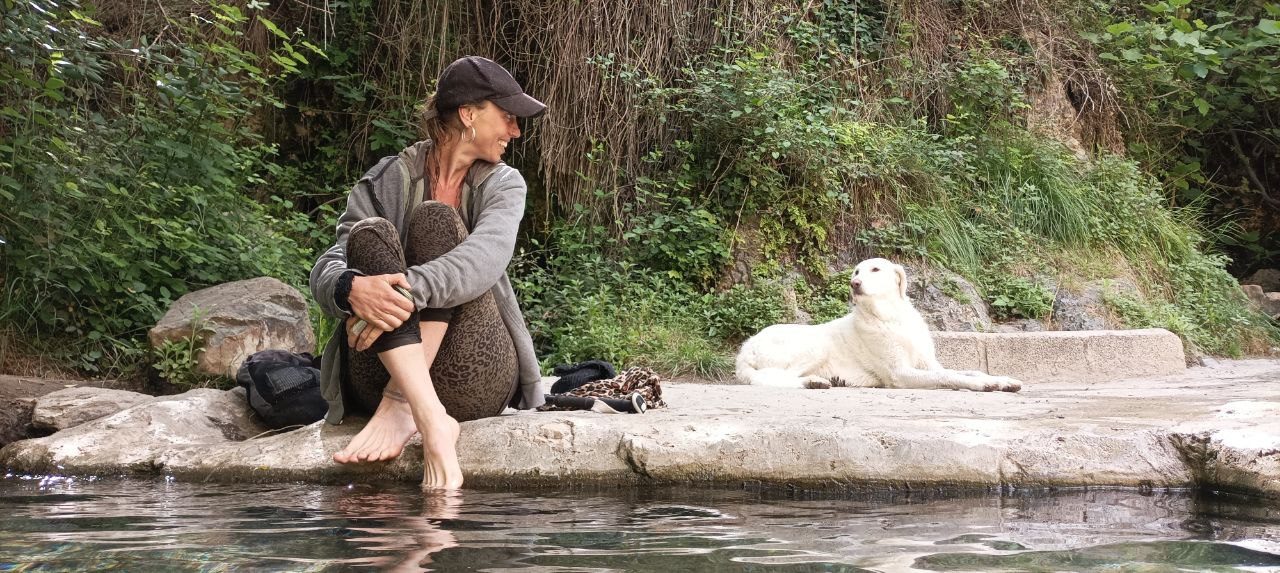
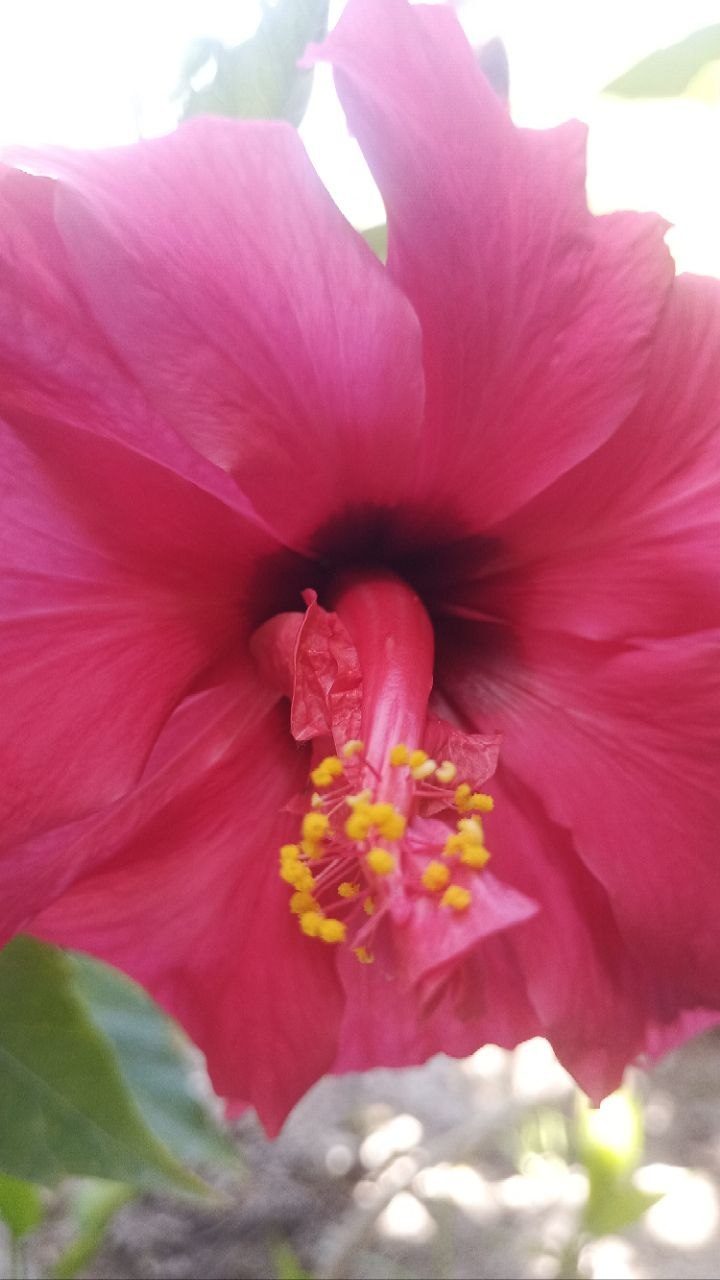
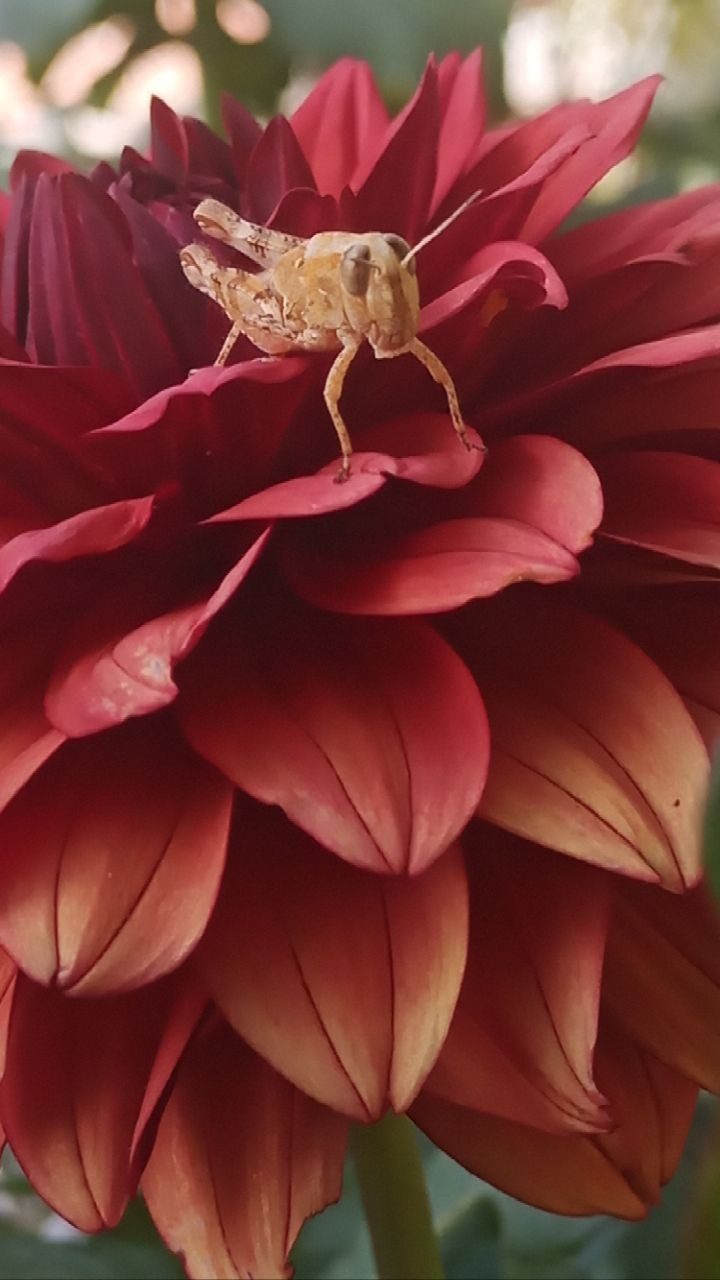
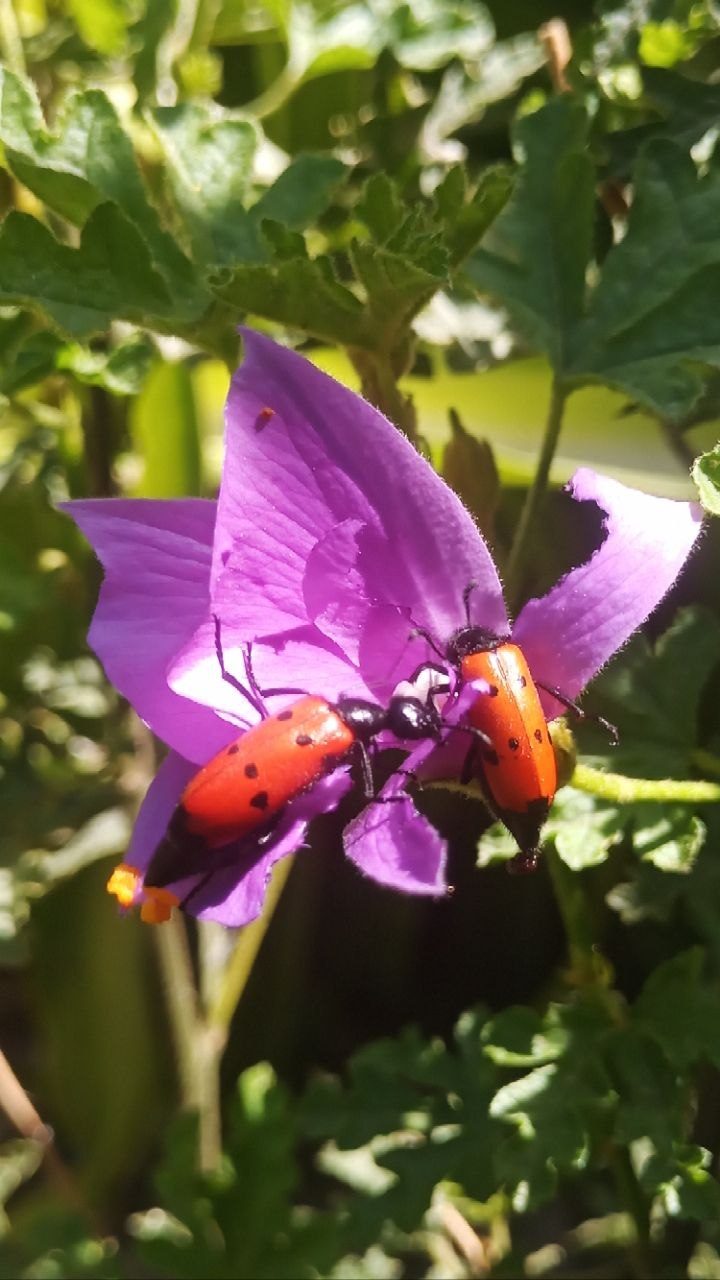
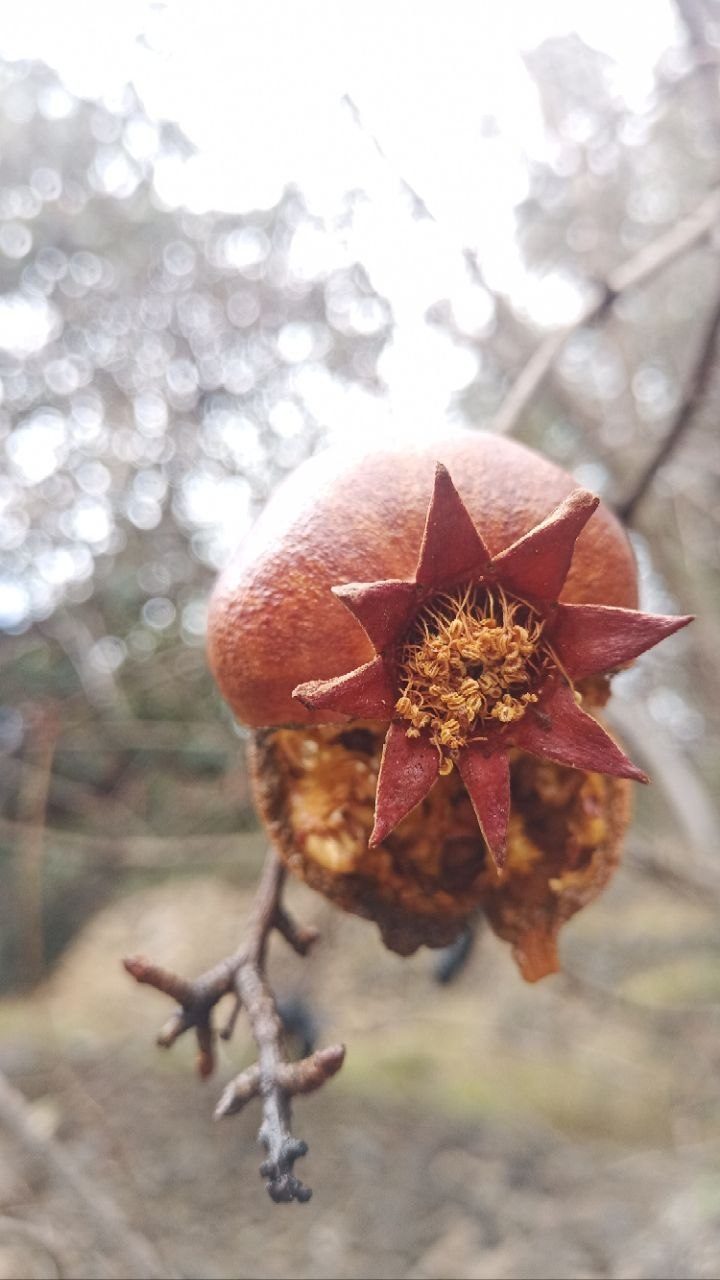
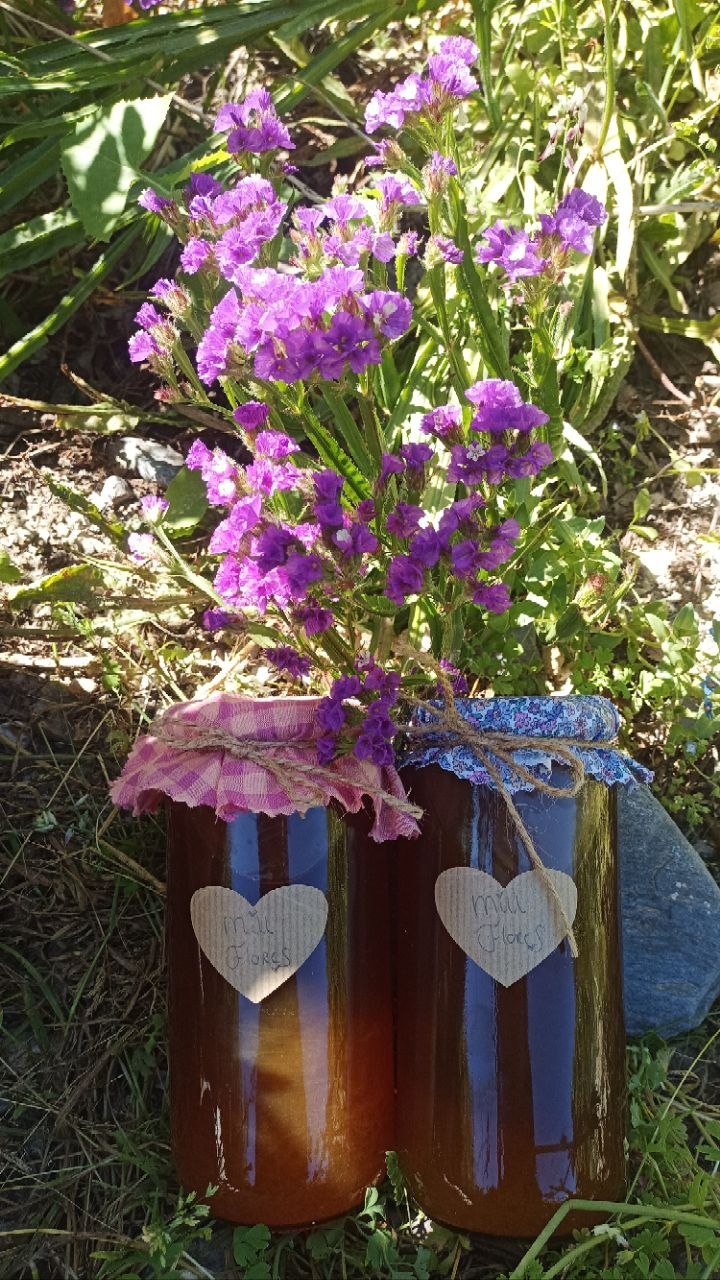
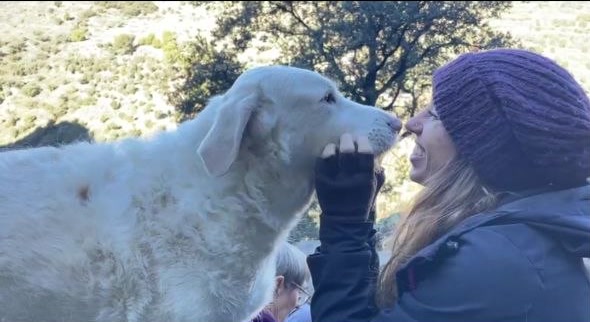
Among the trees.Tussen de bomen.Entre los árboles.The first vegetable beds, laid out in hearts of stone.De eerste moestuinbedden, aangelegd in hartvormen van steen.Los primeros bancales, dispuestos en corazones de piedra.
Our goal — first phase
Ons doel — eerste fase
Nuestra meta — primera fase
€165.000
for the little house and the five pieces of land that touch one another — so we can stay here, and protect this place, its plants and its animals.
voor het huisje en de vijf stukken land die aan elkaar grenzen — zodat we hier kunnen blijven, en deze plek, de planten en de dieren kunnen beschermen.
para la casita y las cinco parcelas que se tocan entre sí — para poder quedarnos aquí, y proteger este lugar, sus plantas y sus animales.
This is the purchase itself. Notary and tax come on top of it.
Dit is de aankoop zelf. Notaris en belasting komen daar bovenop.
Esto es la compra en sí. La notaría y el impuesto vienen aparte.
What else is still to come
The sixth piece of land. The parcels have to touch one another — that is the rule here, so several pieces have to be bought. We do not know the price yet. Our estimate is €90.000.
Joining the parcels. At least €10.000. Also their rule, not our choice.
Tax and notary. Around 7% of the purchase price, plus registration.
The lawyer, the architect, and whatever the town hall asks. We will know when we get there. The moment we do, it will stand here.
The water and the alberca. After that — and the good news is that the water is coming back, and there is a road from above, so there is room here for more people who feel this.
Wat er verder nog ligt
Het zesde stuk land. De percelen horen elkaar te raken — dat is hier de regel, dus er moeten meerdere stukken bij. De prijs weten we nog niet. Onze schatting is €90.000.
Het samenvoegen van de percelen. Minstens €10.000. Ook dat is hun regel, niet onze keuze.
Belasting en notaris. Ongeveer 7% van de koopsom, plus registratie.
De advocaat, de architect, en wat de gemeente vraagt. Dat weten we pas als het zover is. Zodra we het weten, staat het hier.
Het water en de alberca. Daarna — en het mooie is dat het water terugkomt, en dat er een weg van bovenaf is, zodat hier plek is voor meer mensen die dit voelen.
Lo que aún queda por delante
La sexta parcela. Las fincas tienen que tocarse — esa es la norma aquí, así que hay que comprar varias. Todavía no sabemos el precio. Nuestra estimación es de 90.000 €.
Agrupar las fincas. Al menos 10.000 €. También es su norma, no nuestra elección.
Impuesto y notaría. Alrededor del 7% del precio de compra, más el registro.
La abogada, el arquitecto, y lo que pida el ayuntamiento. Eso lo sabremos cuando llegue el momento. En cuanto lo sepamos, estará aquí.
El agua y la alberca. Después — y lo bonito es que el agua está volviendo, y que hay un camino desde arriba, así que aquí hay sitio para más personas que sientan esto.
Whatever comes, there is a way. We are waiting on a decision from the Junta de Andalucía, and there are three roads.
If the yes comes, the nest stays and this piece of ground can become a protected area.
If the no comes and the means are there, it continues in another form: we move the cabina and build in a place where it is allowed, on land that is not yet in our care.
If the no comes and the means are not there, we have to take it apart, store it somewhere, and find a place where we and the animals can be.
So what you give is not a gamble on a permit. In two of the three roads this goes on. In the third it carries us towards finding another place.
Wat er ook komt, er is een weg. We wachten op een besluit van de Junta de Andalucía, en er zijn drie wegen.
Komt de ja, dan blijft het nest staan en kan dit stuk grond een beschermd gebied worden.
Komt de nee en zijn de middelen er, dan gaat het door in een andere vorm: we verplaatsen de cabina en bouwen op een plek waar het wél mag, op land dat nu nog niet onder onze hoede valt.
Komt de nee en zijn de middelen er niet, dan moeten we het afbreken, het ergens opslaan, en een plek zoeken waar wij en de dieren kunnen zijn.
Wat je geeft is dus geen gok op een vergunning. In twee van de drie wegen gaat dit door. In de derde draagt het ons naar het zoeken van een andere plek.
Venga lo que venga, hay un camino. Esperamos una decisión de la Junta de Andalucía, y hay tres caminos.
Si llega el sí, el nido se queda y esta tierra puede convertirse en zona protegida.
Si llega el no y los medios están, sigue de otra forma: trasladamos la cabina y construimos en un lugar donde sí se puede, en tierra que aún no está a nuestro cuidado.
Si llega el no y los medios no están, tendremos que desmontarlo, guardarlo en algún sitio, y buscar un lugar donde podamos estar nosotras y los animales.
Lo que das no es una apuesta a un permiso. En dos de los tres caminos esto sigue. En el tercero nos lleva a buscar otro lugar.
My mother and I have put our savings into this place. There is nothing left to carry this ourselves, whichever way it goes. We write that here plainly, because it is true, and because you should know where your money lands.
Mijn moeder en ik hebben ons spaargeld in deze plek gestopt. Er is niets meer over om dit zelf te dragen, welke kant het ook op beweegt. Dat schrijven we hier gewoon op, want het is waar, en omdat je hoort te weten waar je geld terechtkomt.
Mi madre y yo hemos puesto nuestros ahorros en este lugar. No queda nada para sostener esto por nuestra cuenta, vaya como vaya. Lo escribimos aquí sin rodeos, porque es verdad, y porque debes saber dónde acaba tu dinero.
Guardians of a share
Aandeelhoeders
Guardianes de una parte
We are looking for people who want to guard a share. Not a share in ownership — a share in care.
Where we stand now. A guardian supports financially at this moment. We are waiting on a decision from the Junta de Andalucía. Until that comes, we cannot promise anything about living or staying here — that still has to be made afterwards.
If the yes comes, this piece of ground can become a protected area, where a number of people can carry the care together so that it does not rest on two pairs of shoulders. With room to be, and to come to rest. Where the animals are at home, where the people who already live here belong, and where nature itself is protected.
The ground carries the work. We are setting up a system that carries care, and we want to help others do the same. Everything we make — The Wellspring, the dossiers, the food, the care for the animals, whatever arises in art, music and film — comes from the same source: connection, and the wellbeing of everything and everyone. All of it is an expression of that. This place is where that work can stand, and where we can carry it on.
It is ground that asks for silence. Everything made here is made in connection with this place.
What you step into. This is an invitation to step into the stream. Giving and receiving are one movement, and the more people are connected to it again, the more strongly it flows.
The land becomes a place for the people here in the surroundings: where food can be fetched and brought. What grows in surplus goes, in consultation, to whoever needs it. And we are setting up a section for animals, for people here who cannot financially manage to give their animals what they need.
What we can pass on is the care — in money that is beyond us at this moment. That is how another economy begins: we share what we have, the abundance that is there starts to flow between people again, and the dependence on one system grows smaller. We can all help and carry one another, so that nobody has to fall short — and so together we make a new world.
That is what a share means here. No return — a stream that starts to move, out of love, equality and inclusiveness.
We zoeken mensen die een aandeel willen hoeden. Geen aandeel in bezit — een aandeel in zorg.
Waar we nu staan. Een aandeelhoeder steunt op dit moment financieel. We wachten op een besluit van de Junta de Andalucía. Zolang dat er niet is, kunnen we niets toezeggen over wonen of verblijven — dat moet daarna nog gemaakt worden.
Komt de ja, dan kan dit stuk grond een beschermd gebied worden, waar een aantal mensen samen de zorg voor kunnen dragen zodat het niet op twee paar schouders rust. Met ruimte om te zijn en tot rust te komen. Waar de dieren thuis zijn, waar de mensen die hier al wonen erbij horen, en waar de natuur zelf beschermd is.
De grond draagt het werk. Wij zijn bezig een zorgdragend systeem neer te zetten, en we willen anderen helpen dat ook te doen. Alles wat we maken — The Wellspring, de dossiers, het voedsel, de zorg voor de dieren, wat er aan kunst, muziek en film ontstaat — komt uit dezelfde bron: verbinding, en het welzijn van alles en iedereen. Alles daarvan is daar een uiting van. Deze plek is waar dat werk kan staan en waar we het voort kunnen zetten.
Het is een grond die om stilte vraagt. Alles wat hier wordt gemaakt, wordt gemaakt in verbinding met deze plek.
Waar je in stapt. Dit is een uitnodiging om in de stroom te stappen. Geven en ontvangen zijn één beweging, en hoe meer mensen daar weer mee in verbinding staan, hoe krachtiger die gaat stromen.
Het land wordt een plek voor de mensen hier in de omgeving: waar voedsel gehaald kan worden en gebracht. Wat er in overschot groeit gaat, in overleg, naar wie het nodig heeft. En we zetten een dierenstuk op, voor mensen hier die het financieel niet redden om hun dieren te geven wat ze nodig hebben.
Wat wij kunnen doorgeven is de zorg — in geld lukt dat op dit moment niet. Zo begint een andere economie: we delen wat we hebben, de overvloed die er is gaat weer stromen tussen mensen onderling, en de afhankelijkheid van één systeem wordt kleiner. We kunnen elkaar allemaal helpen en dragen, zodat niemand iets tekort hoeft te komen — en zo maken we samen een nieuwe wereld.
Dat is wat een aandeel hier betekent. Geen rendement — een stroom die op gang komt, vanuit liefde, gelijkheid en inclusiviteit.
Buscamos personas que quieran guardar una parte. No una parte en propiedad — una parte en cuidado.
Dónde estamos ahora. Un guardián apoya en este momento económicamente. Esperamos una decisión de la Junta de Andalucía. Mientras no llegue, no podemos prometer nada sobre vivir o quedarse aquí — eso aún hay que crearlo después.
Si llega el sí, esta tierra puede convertirse en zona protegida, donde varias personas puedan sostener juntas el cuidado para que no recaiga sobre dos pares de hombros. Con espacio para estar y para reposar. Donde los animales estén en casa, donde las personas que ya viven aquí pertenezcan, y donde la naturaleza misma esté protegida.
La tierra sostiene el trabajo. Estamos levantando un sistema que sostiene el cuidado, y queremos ayudar a otros a hacer lo mismo. Todo lo que hacemos — The Wellspring, los dosieres, el alimento, el cuidado de los animales, lo que surge en arte, música y cine — viene de la misma fuente: la conexión, y el bienestar de todo y de todos. Todo ello es una expresión de eso. Este lugar es donde ese trabajo puede sostenerse y donde podemos continuarlo.
Es una tierra que pide silencio. Todo lo que aquí se hace, se hace en conexión con este lugar.
En qué entras. Esto es una invitación a entrar en la corriente. Dar y recibir son un mismo movimiento, y cuantas más personas vuelvan a estar conectadas con él, con más fuerza fluye.
La tierra se convierte en un lugar para las personas de aquí, del entorno: donde se puede recoger y traer alimento. Lo que crece de más va, de común acuerdo, a quien lo necesite. Y estamos montando una parte para los animales, para personas de aquí que económicamente no llegan a darles lo que necesitan.
Lo que podemos transmitir es el cuidado — en dinero ahora mismo no nos alcanza. Así empieza otra economía: compartimos lo que tenemos, la abundancia que hay vuelve a fluir entre las personas, y la dependencia de un solo sistema se hace menor. Todos podemos ayudarnos y sostenernos, para que nadie tenga que quedarse corto — y así hacemos juntos un mundo nuevo.
Eso es lo que significa aquí una parte. Ningún rendimiento — una corriente que se pone en marcha, desde el amor, la igualdad y la inclusión.
What your help makes possible
Wat jouw hulp mogelijk maakt
Lo que tu ayuda hace posible
⚖
The legal & technical path
The lawyer, the architect, and the reports, drawings and permit steps the rules require — the price of doing this properly, to be able to get a yes.
🏠
Securing the place
Buying the land with the cortijo so we may live here and keep caring for it — or, if we must tear down, the cost of that and of a new home in nature for the animals.
💧
The water & the land
Finishing the water system here, so the land bears food, medicinal herbs and edible flowers again — for the community, the bees and the butterflies. And bringing water back to the abandoned land we need to buy, so it revives, we can plant more trees, and it is protected from the wildfires that struck twice in five years.
⚖
De juridische & technische weg
De advocata, de architect, en de rapporten, tekeningen en vergunningsstappen die de regels vragen — de prijs van het netjes doen, om een ja te kunnen krijgen.
🏠
De plek zeker stellen
Het land met de cortijo aankopen zodat we hier mogen wonen en blijven zorgen — of, als we moeten afbreken, de kosten daarvan en van een nieuwe plek in de natuur voor de dieren.
💧
Het water & het land
De wateraanleg hier afmaken, zodat het land weer voedsel, geneeskrachtige kruiden en eetbare bloemen draagt — voor de gemeenschap, de bijen en de vlinders. En het water terugbrengen op het verlaten land dat we moeten kopen, zodat het weer opleeft, we meer bomen kunnen planten, en het beschermd is tegen de bosbranden die er in vijf jaar al twee keer waren.
⚖
El camino jurídico y técnico
La abogada, el arquitecto, y los informes, planos y trámites que exigen las normas — el precio de hacerlo bien, para poder obtener un sí.
🏠
Asegurar el lugar
Comprar la tierra con el cortijo para poder vivir aquí y seguir cuidándola — o, si hay que derribar, el coste de ello y de un nuevo hogar en la naturaleza para los animales.
💧
El agua y la tierra
Terminar la instalación del agua aquí, para que la tierra vuelva a dar alimento, hierbas medicinales y flores comestibles — para la comunidad, las abejas y las mariposas. Y devolver el agua a la tierra abandonada que debemos comprar, para que reviva, podamos plantar más árboles, y quede protegida de los incendios que ya ocurrieron dos veces en cinco años.
And one more call
En nog een oproep
Y una llamada más
We have a very good lawyer who truly cares. But if there is anyone with expertise in this — someone who feels moved to help — we would be deeply grateful to have you strengthen our team.
We hebben een heel goede advocaat die het werkelijk aan het hart gaat. Maar als er iemand is met expertise hierin — iemand die het vóelt om ons te helpen — dan zijn we daar heel dankbaar voor, om ons team te versterken.
Tenemos un abogado muy bueno, que de verdad se preocupa. Pero si hay alguien con experiencia en esto — alguien que sienta el impulso de ayudar — se lo agradeceríamos enormemente, para reforzar nuestro equipo.
Because for us this does not feel like something that is only ours. Losing the roof over your head — through money, or through something that simply is not right — is terrible. And it happens. It can happen to any of us; it is only a question of when it lands on your own doorstep. This is what we may stand up for, together.
Want voor ons voelt dit niet als iets wat alleen van ons is. Het dak boven je hoofd verliezen — door geld, of door iets wat gewoon onterecht is — is verschrikkelijk. En het gebeurt. Het kan ons allemaal overkomen; het is alleen de vraag wanneer het bij jou op de stoep staat. Hier horen we samen voor te gaan staan.
Porque para nosotras esto no se siente como algo que sea solo nuestro. Perder el techo sobre tu cabeza — por dinero, o por algo que sencillamente no es justo — es terrible. Y ocurre. Nos puede pasar a cualquiera; solo es cuestión de cuándo llega a tu propia puerta. Esto es por lo que podemos plantarnos, juntos.
How you can help
Hoe je kunt helpen
Cómo puedes ayudar
You can contribute through a Spanish bank account — so anyone, anywhere, can transfer directly — and through GoFundMe. Every contribution, large or small, helps keep this nest standing.
Je kunt bijdragen via een Spaanse bankrekening — zodat iedereen, waar ook ter wereld, rechtstreeks kan overmaken — en via GoFundMe. Elke bijdrage, groot of klein, helpt dit nest overeind te houden.
Puedes contribuir a través de una cuenta bancaria española — para que cualquiera, en cualquier parte, pueda transferir directamente — y a través de GoFundMe. Cada aportación, grande o pequeña, ayuda a mantener en pie este nido.
Bank transfer · SpainBankoverschrijving · SpanjeTransferencia · EspañaES23 2100 4974 5522 0007 6592Grietje Schouten · BIC CAIXESBBXXXtap to copytik om te kopiërentoca para copiarcopied ✓
The land
Het land
La tierra
For the animals rescued and cared for here, there will be a dedicated place — so you can help in a targeted way whenever an animal needs it.Voor de dieren die hier gered en verzorgd worden, komt er een eigen plek — zodat je heel gericht kunt meehelpen wanneer een dier hulp nodig heeft.Para los animales rescatados y cuidados aquí habrá un espacio propio — para que puedas ayudar de forma concreta cuando un animal lo necesite.